

Size of picnic table is a crucial consideration for anyone looking to enhance their outdoor living space, whether for casual family meals or larger gatherings. Understanding the various standard dimensions, seating capacities, and factors influencing table selection ensures you pick the perfect fit for your needs. From compact patios to expansive backyards, the right table size can significantly impact usability and comfort, making every outdoor moment more enjoyable.
Standard Dimensions and Seating Capacity
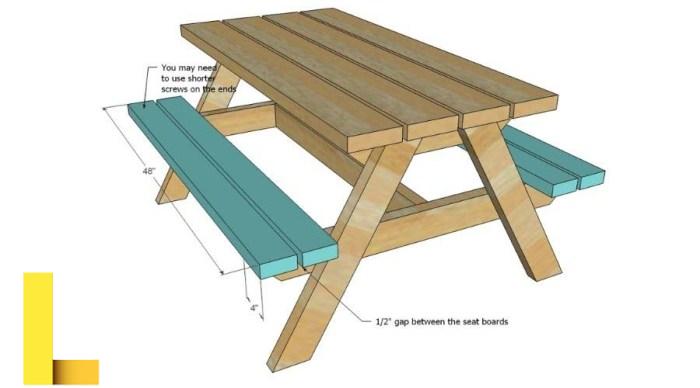
Understanding the standard dimensions and seating capacities of picnic tables is crucial for selecting the right model for any given space or purpose. These measurements directly impact the comfort of users and the overall functionality of the outdoor dining experience. Whether for a backyard, a park, or a commercial setting, knowing these typical sizes helps ensure adequate space for both the table itself and the individuals gathered around it.The design of a picnic table, particularly its shape and size, plays a significant role in determining how many people can comfortably be accommodated.
Factors such as tabletop length, width, and overall height, along with the dimensions of integrated benches, are carefully considered by manufacturers to optimize both utility and ergonomic comfort. This standardization allows for predictable planning and ensures that a “standard” table generally meets common expectations for group gatherings.
Common Shapes and Their Typical Dimensions, Size of picnic table
Picnic tables are predominantly available in three main shapes: rectangular, square, and round, each offering distinct advantages in terms of space utilization and social interaction. Rectangular tables are highly versatile and often preferred for larger groups, while square and round tables foster a more intimate setting, allowing easier conversation among all seated individuals.For rectangular picnic tables, a common length ranges from 6 feet (72 inches or 183 cm) to 8 feet (96 inches or 244 cm).
The typical width for the tabletop is about 28 to 30 inches (71 to 76 cm), providing sufficient space for place settings and serving dishes. These tables usually stand between 28 to 30 inches (71 to 76 cm) tall, with benches positioned at an ergonomic height of approximately 17 to 18 inches (43 to 46 cm) from the ground. A 6-foot rectangular table can comfortably seat 6-8 adults, while an 8-foot version typically accommodates 8-10.Square picnic tables are often more compact, making them suitable for smaller patios or gardens.
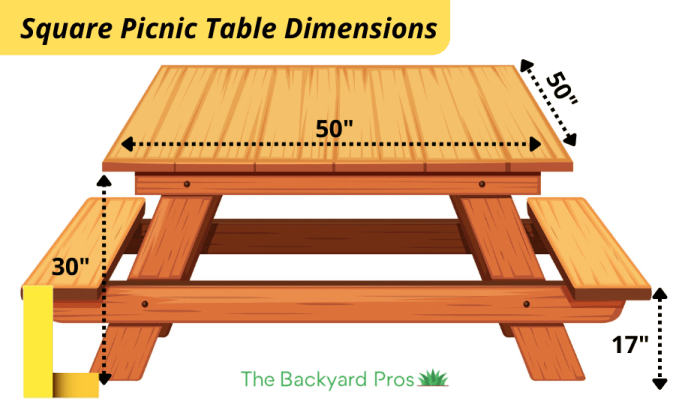
A common size features a tabletop that is 48 inches (122 cm) by 48 inches (122 cm). This configuration generally allows for 8 adults to sit comfortably, with two on each side, promoting closer interaction. The height specifications, including tabletop and bench heights, are generally consistent with those of rectangular tables to maintain universal comfort standards.Round picnic tables are excellent for fostering conversation, as everyone faces inward.
Common diameters for round tables range from 48 inches (122 cm) to 60 inches (152 cm). A 48-inch diameter round table typically seats 6 adults, while a 60-inch diameter table can comfortably accommodate 8. The absence of corners can also make them safer in high-traffic areas, reducing the risk of accidental bumps.
Detailed Overview of Standard Picnic Table Sizes
To provide a clearer perspective on the common sizes and their corresponding capacities, the following table Artikels typical dimensions for various standard picnic table configurations. These figures represent widely accepted industry standards, assisting consumers in making informed decisions based on their specific needs for space and seating.
| Table Shape | Length Range (inches/cm) | Width/Diameter Range (inches/cm) | Typical Seating Capacity |
|---|---|---|---|
| Rectangular | 72 inches (183 cm) | 28-30 inches (71-76 cm) | 6-8 adults |
| Rectangular | 96 inches (244 cm) | 28-30 inches (71-76 cm) | 8-10 adults |
| Square | 48 inches (122 cm) | 48 inches (122 cm) | 8 adults |
| Round | N/A | 48 inches (122 cm) diameter | 6 adults |
| Round | N/A | 60 inches (152 cm) diameter | 8 adults |
Visualizing Seating Comfort: A Rectangular Table Scenario
Imagine a robust, standard rectangular picnic table, approximately 72 inches (183 cm) long and 30 inches (76 cm) wide, crafted from sturdy, weather-resistant timber with a warm, natural finish. Six adults are comfortably seated around it: two on each of the longer sides and one at each end, facing inwards. The table’s height, around 30 inches (76 cm) from the ground, allows for ample legroom beneath, preventing any discomfort or feeling of being cramped.
The attached benches, positioned at a comfortable 18 inches (46 cm) from the ground, provide stable and ergonomic seating. Each person has sufficient elbow room, able to enjoy their meal, reach for shared dishes, and engage in conversation without feeling restricted or having to jostle for space. The solid construction of the table is evident, with thick planks forming both the tabletop and the benches, secured by strong cross-supports.
The scene conveys a sense of ease and social interaction, demonstrating how well-proportioned a standard rectangular picnic table can accommodate a group for a pleasant outdoor gathering.
Factors Influencing Table Size Selection
Choosing the appropriate picnic table size is a pivotal decision that significantly impacts the functionality and aesthetics of any outdoor space. It extends beyond merely accommodating a certain number of people; it involves a thoughtful assessment of how the table will integrate into its environment and serve its intended purpose. The right size ensures comfort, maximizes utility, and enhances the overall outdoor experience.The selection process for a picnic table hinges on several primary considerations, fundamentally driven by the dimensions of your available outdoor space, the specific activities you envision for the table, and the typical number of individuals who will be using it.
A compact patio, for instance, necessitates a different approach than a sprawling backyard or a dedicated public park area. The table’s primary function—whether it’s intended for intimate family dinners, lively board game sessions, extensive craft projects, or simply as a gathering point—will heavily dictate its required surface area and overall footprint, ensuring it meets practical demands without overwhelming its surroundings.
Outdoor Environment Impact on Table Dimensions
The physical characteristics of your outdoor environment play a crucial role in guiding the appropriate picnic table dimensions, ensuring that the chosen piece offers optimal functionality without causing overcrowding or appearing underutilized. Different settings demand distinct considerations for scale and design.
-
Compact Patio: For urban balconies, small apartment patios, or limited townhouse courtytyards, smaller and often more versatile tables are ideal. These spaces typically benefit from tables that are square or round, designed to seat 2-4 individuals comfortably. For example, a 36-inch round table or a 48-inch square table allows for adequate dining space without obstructing movement or making the area feel cramped.
Foldable options are particularly advantageous here, enabling the space to be reconfigured for other uses when the table is not needed.
-
Spacious Backyard: Homes with generous lawn space or expansive deck areas can accommodate larger, more substantial picnic tables. These environments are well-suited for rectangular tables that can seat 6-8 people or more, often becoming a central feature for family gatherings, barbecues, and children’s activities. A common dimension for such a setting might be a 72-inch or 96-inch rectangular table, providing ample room for meals, board games, and even a spread of craft supplies.
Selecting the right picnic table size is paramount for a comfortable gathering. When organizing an enjoyable outdoor event, perhaps exploring options for a picnic austin tx , it’s essential to match the table’s capacity to your guest list, ensuring everyone has adequate seating and surface area.
Such tables can anchor an outdoor living space, encouraging prolonged social interaction.
-
Public Park Setting: In public spaces like community parks, campgrounds, or schoolyards, picnic tables must be exceptionally durable, heavy-duty, and often fixed to the ground to withstand high traffic and varied public use. These tables are typically designed to accommodate larger groups, often seating 8-10 people. For instance, a 96-inch or 120-inch rectangular table, constructed from robust materials like recycled plastic, steel, or reinforced concrete, is common.
These dimensions allow for multiple families or large groups to share the space, enduring constant exposure to elements and diverse activities from casual lunches to large group events.
Practical Implications of Table Sizes
Understanding the practical implications of choosing between a larger and a smaller picnic table is fundamental for optimal outdoor space planning and ensuring a positive user experience. Each size category presents distinct advantages and challenges concerning placement, maneuverability, and integration with existing outdoor furniture.Before making a final selection, consider the following practical aspects:
-
Placement:
- Larger Tables: These tables require a significant amount of clear, unobstructed space. Their substantial footprint means they are often limited to open areas, becoming a dominant feature. Placing a large table in a confined space can quickly make the area feel cramped and difficult to navigate, potentially blocking pathways or views.
- Smaller Tables: Offering greater flexibility, smaller tables can be positioned in more diverse locations, including cozy nooks, corners, or alongside existing structures. Their compact size allows for creative space utilization without creating obstructions, making them suitable for multi-functional outdoor areas.
- Maneuverability:
- Larger Tables: Due to their size and weight, larger picnic tables are inherently more cumbersome. Relocating or reconfiguring them for different events or seasonal changes can be challenging, often requiring multiple people or specialized equipment. Many larger models are designed to be semi-permanent fixtures.
- Smaller Tables: Generally lighter and easier to handle, smaller tables offer superior maneuverability. They can be readily moved to accommodate varying needs, such as shifting into the shade, clearing space for an activity, or storing them away during inclement weather, allowing for dynamic rearrangement of the outdoor area.
- Compatibility with Existing Outdoor Furniture:
- Larger Tables: A substantial picnic table can sometimes overshadow or clash with other patio furniture, such as lounge chairs, smaller dining sets, or decorative elements, especially in a limited area. Careful consideration of scale and design harmony is necessary to ensure the entire outdoor arrangement feels balanced and cohesive.
- Smaller Tables: These tables tend to integrate more harmoniously with existing outdoor furniture. They can serve as complementary pieces, adding functionality without overwhelming the overall aesthetic or functional balance of the space. Their modest size allows them to blend in rather than dominate, contributing to a more curated outdoor environment.
Customization and Non-Standard Sizes
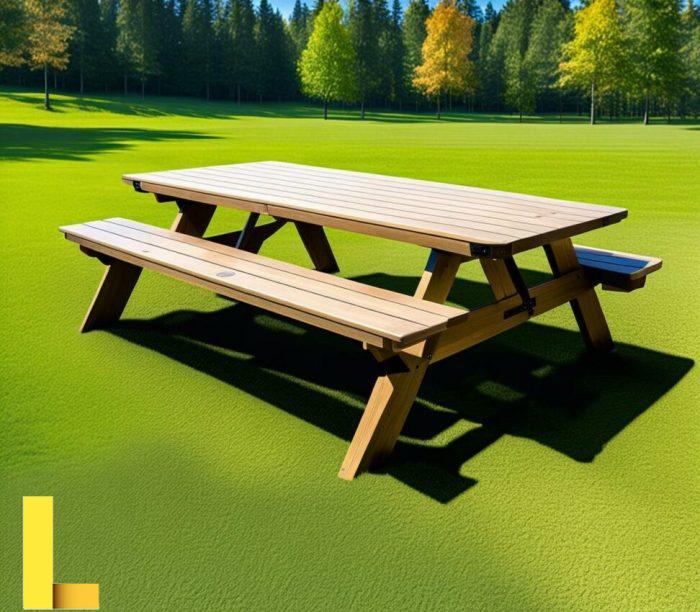
While standard picnic table dimensions serve a broad range of needs, there are often situations where a bespoke approach is not just beneficial but essential. Customization allows for the creation of picnic tables that perfectly align with unique spatial constraints, specific user requirements, or particular aesthetic visions, moving beyond the limitations of mass-produced options to deliver truly tailored solutions.
Selecting the appropriate size for your picnic table significantly impacts comfort and utility. This consideration becomes particularly important when you envision complementing it with a delightful embroidered picnic blanket , ensuring a harmonious fit without excessive overhang. Ultimately, matching the table dimensions to your space and needs optimizes every outdoor gathering.
Advantages of Custom Picnic Table Sizes
Opting for a custom-sized picnic table offers significant advantages in various unique circumstances, ensuring optimal functionality and integration. These scenarios often involve specific user needs or challenging environments that standard tables cannot adequately address.
- Accommodating Unique Physical Requirements: Custom tables can be designed with specific heights, widths, or seating arrangements to better suit individuals with particular physical needs, such as those requiring wheelchair access or specialized ergonomic support. This ensures comfort and inclusivity, making outdoor dining accessible to everyone. For instance, a table might feature an extended end for wheelchair roll-up, or lower bench heights for children or individuals with limited mobility.
- Fitting Irregular Spaces: Many outdoor areas, particularly in urban gardens or uniquely shaped patios, do not conform to standard rectangular or square layouts. Custom tables can be crafted to fit snugly into corners, along curved walls, or around existing landscape features, maximizing usable space and creating a cohesive look. An L-shaped or even a triangular table can transform an awkward nook into a functional dining area.
-
Serving Specific Group Sizes Beyond Standard Offerings: When entertaining very large families, a specific number of guests, or a small, intimate group, standard tables might be too small or excessively large. Custom dimensions allow for precise seating capacity, whether it’s an extra-long table for a community gathering of 16 people or a compact, square table designed for just two, ensuring comfortable spacing without wasted surface area.
Determining the optimal size for your picnic table is key to maximizing comfort and functionality in any outdoor setting. Such detailed planning extends to broader ventures, particularly when you’re looking into effective strategies for financing recreational land. Thoughtful financial arrangements can indeed facilitate the development of expansive areas, ensuring your final picnic table selection perfectly suits the grand scale.
Determining Ideal Dimensions for a Custom Picnic Table
Creating a custom picnic table requires a systematic approach to ensure all functional and aesthetic requirements are met. The following procedure Artikels key steps for calculating precise dimensions.
- Assess User Needs and Space Constraints: Begin by thoroughly evaluating the intended location and primary users. Measure the available space meticulously, noting any obstructions, slopes, or adjacent features. Consider the primary users: will it be for adults, children, or a mix? What activities will primarily take place on it (dining, crafts, games)?
- Calculate Seating Capacity and Individual Space: Determine the desired number of occupants. A general rule for comfortable dining space is to allocate approximately 24-30 inches (60-75 cm) of linear table edge per person. For benches, ensure enough width for each person, typically 16-18 inches (40-45 cm) deep for seating.
- Factor in Material Thickness: The choice of material (e.g., 2×4, 2×6, 4×4 lumber, or thicker slabs) directly impacts overall dimensions and structural integrity. Account for the thickness of the tabletop, bench seats, and leg components when planning the final height and clearances. For example, if using 2-inch thick lumber for the tabletop, this adds 2 inches to the total height from the frame.
- Ensure Adequate Legroom: A critical consideration for comfort is legroom. The distance from the top of the bench seat to the underside of the tabletop should typically be between 12-14 inches (30-35 cm). The height from the ground to the top of the bench should be around 17-19 inches (43-48 cm), and the tabletop height usually ranges from 28-31 inches (71-79 cm).
For optimal leg clearance, aim for a minimum of 12 inches (30 cm) between the top of the bench and the underside of the table.
- Determine Tabletop Overhang: The overhang of the tabletop beyond the support frame or legs is both an aesthetic and functional element. A typical overhang is 3-6 inches (7.5-15 cm) on the ends and sides. This provides a comfortable edge for leaning and can prevent rain from dripping directly onto the benches or legs, thereby extending the table’s lifespan. Excessive overhang can, however, compromise stability if not properly supported.
- Consider Accessibility and Movement: If wheelchair access is required, ensure a clear space of at least 30 inches (76 cm) wide and 27 inches (68 cm) high under the table at the designated accessible spot. Also, consider the space needed around the table for people to sit down, stand up, and move comfortably. A minimum of 36 inches (90 cm) clear space around the perimeter is generally recommended.
A Garden Corner Oasis: An L-Shaped Picnic Table Illustration
Imagine a tranquil garden corner, embraced by a low, verdant hedge of lavender and rosemary, where a bespoke L-shaped picnic table forms the heart of an intimate outdoor dining experience. The table, crafted from weathered, reclaimed cedar, exudes a rustic charm, its natural grain patterns visible through a subtle, clear sealant. One arm of the ‘L’ extends along the garden’s main path, while the shorter arm tucks neatly into the corner, making efficient use of what would otherwise be an awkward space.The tabletop itself is generously wide, allowing for ample space for platters and decorations, and features slightly rounded edges for a softer, more inviting feel.
Integrated directly into the table’s structure are contoured benches, also of cedar, that follow the ‘L’ shape. These benches are not merely flat planks; instead, their seats are gently scooped, and the backrests, though low, curve subtly to provide ergonomic support, inviting guests to linger. Small, strategically placed planters, built into the ends of the benches, overflow with vibrant petunias and trailing ivy, seamlessly blending the furniture with the surrounding flora.
Overhead, a string of warm Edison bulbs drapes casually between two sturdy garden posts, casting a soft, ambient glow as dusk approaches, creating an idyllic setting for casual meals or quiet contemplation amidst the fragrant garden. The entire assembly feels less like a piece of furniture and more like an organic extension of the garden itself, perfectly tailored to its surroundings.
Final Wrap-Up
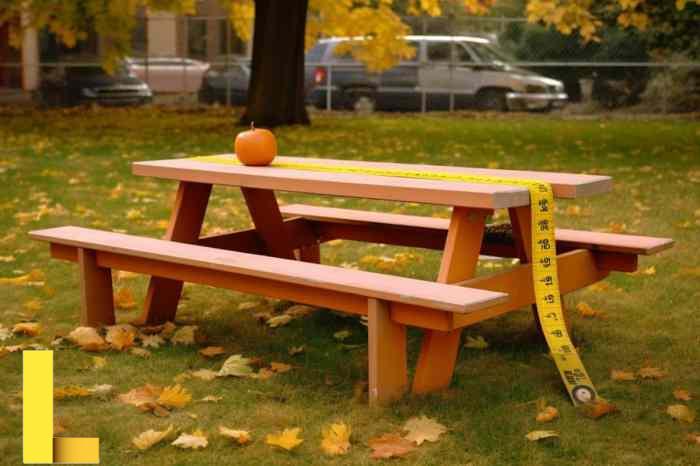
Ultimately, selecting the ideal size of picnic table is a balance between functionality, aesthetics, and the specific demands of your outdoor environment. By considering standard dimensions, evaluating influencing factors, and exploring customization options, you can ensure your chosen table not only fits perfectly but also serves as a beloved hub for countless outdoor memories. A well-chosen picnic table truly transforms any space into a welcoming area for dining, games, and shared experiences.
FAQ Resource: Size Of Picnic Table
What materials are commonly used for picnic tables?
Common materials include wood (pine, cedar, redwood), recycled plastic, metal (aluminum, steel), and concrete, each offering different aesthetics, durability, and maintenance requirements.
How do I maintain my picnic table to ensure longevity?
Regular cleaning with mild soap and water, applying sealants or stains for wooden tables annually, and protecting it from harsh weather elements with covers can significantly extend its lifespan.
Are there accessible picnic table options for wheelchair users?
Yes, many manufacturers offer ADA-compliant picnic tables designed with extended tabletops and open ends to accommodate wheelchairs comfortably, ensuring inclusivity for all users.
Can picnic tables be easily moved or are they typically stationary?
While many standard picnic tables are quite heavy and stationary, lighter, foldable, or portable options made from aluminum or plastic are available for those needing flexibility and easy storage.

