

Recreational therapy assistant roles are vital in healthcare, focusing on holistic patient well-being through engaging activities. These dedicated professionals play a crucial part in supporting individuals to improve their physical, mental, and emotional health, making a significant difference in their recovery and quality of life.
Delving deeper, recreational therapy assistants work closely with certified recreational therapists and other healthcare team members to implement tailored treatment plans. Their daily duties involve leading diverse recreational activities, adapting them to meet specific patient needs, and fostering an environment of enjoyment and participation across various settings, from hospitals to community centers.
Core Functions and Daily Duties of a Recreational Therapy Assistant

The recreational therapy assistant plays a pivotal role in the therapeutic process, working under the direct supervision of a certified recreational therapist to enhance the well-being and functional abilities of diverse client populations. Their work is essential in translating treatment plans into engaging, meaningful activities that foster recovery, skill development, and improved quality of life. This section delves into the specifics of their responsibilities, daily routines, and collaborative efforts within the healthcare team.
Primary Functions and Scope of Practice
The primary functions of a recreational therapy assistant involve the direct implementation of therapeutic recreation interventions designed by a certified recreational therapist. This includes facilitating group and individual activities, preparing activity spaces, documenting client progress, and ensuring client safety and engagement during sessions. Their scope of practice is focused on the delivery aspect of the treatment plan, ensuring that activities are conducted as prescribed and adapted to meet individual client needs.While both roles are integral to recreational therapy, a clear distinction exists between the assistant and the certified recreational therapist.
The certified recreational therapist is responsible for the comprehensive assessment of clients, the development of individualized treatment plans, and the evaluation of outcomes. They hold the authority for clinical decision-making, supervision, and program design. The assistant, conversely, executes these plans, focusing on the practical application of interventions and providing valuable observations back to the therapist.
The recreational therapy assistant implements, while the certified recreational therapist assesses, plans, and evaluates.
Common Daily Tasks and Specific Procedures
Recreational therapy assistants engage in a variety of tasks each day, all contributing to the effective delivery of therapeutic services. These tasks require a blend of organizational skills, creativity, and compassionate client interaction. Prior to commencing any activity, the assistant ensures all necessary materials are prepared and the environment is safe and conducive to the planned intervention.Common daily tasks and specific procedures include:
- Setting up and preparing activity areas, ensuring accessibility and safety for all participants.
- Leading or co-leading planned therapeutic recreation activities, such as arts and crafts, adaptive sports, music sessions, or social games.
- Modifying activities to accommodate varying physical, cognitive, or emotional abilities of clients, ensuring inclusive participation.
- Providing direct supervision and assistance to clients during activities, promoting independence while offering support as needed.
- Observing and documenting client participation, engagement levels, and responses to interventions, noting any significant changes or progress.
- Maintaining and organizing equipment and supplies, ensuring they are clean, functional, and readily available for future sessions.
- Assisting with client transportation to and from activity locations within the facility.
- Communicating client observations and feedback to the supervising certified recreational therapist to inform ongoing treatment planning.
- Participating in team meetings to discuss client progress and contribute insights from direct client interaction.
Collaboration with Healthcare Professionals
Effective recreational therapy is inherently collaborative, with assistants working closely not only with their supervising therapist but also with a broader multidisciplinary team. This integrated approach ensures that client care is holistic and well-coordinated, addressing various aspects of their health and well-being. Regular communication and information sharing are cornerstones of this collaborative environment.Recreational therapy assistants often collaborate with nurses, occupational therapists, physical therapists, social workers, and psychologists.
For instance, they might consult with a physical therapist to understand a client’s mobility limitations when planning an adaptive exercise, or speak with a nurse regarding medication schedules that might impact a client’s energy levels for an activity. This interdisciplinary communication ensures that therapeutic recreation activities complement other treatment modalities and align with overall care goals, preventing duplication of effort and maximizing therapeutic benefit.Crucially, the recreational therapy assistant works in constant collaboration with the certified recreational therapist to implement treatment plans effectively.
The therapist designs the overarching plan, outlining specific goals and interventions. The assistant then brings these plans to life, adapting activities in real-time based on client responses and reporting back detailed observations. This feedback loop is vital; the assistant’s direct insights into client engagement and progress during activities inform the therapist’s ongoing assessment and potential modifications to the treatment plan, ensuring a dynamic and responsive therapeutic process.
Engaging Scenario: Modified Board Game Activity
Imagine a bright, sunlit common room in a long-term care facility, where the air is filled with soft murmurs of anticipation. A recreational therapy assistant, Sarah, is seated at a large, round table, surrounded by a group of six elderly patients. On the table, a vibrant, oversized board game is spread out, its large pieces and clearly printed spaces designed for easy visibility and manipulation.
This is “Memory Lane Mania,” a modified game where players move their tokens by answering questions about past experiences or identifying historical images, encouraging cognitive stimulation and social interaction.As Sarah explains the simple rules, she smiles warmly, making eye contact with each participant. Mrs. Rodriguez, with her spectacles perched on her nose, leans forward, a hint of excitement in her eyes.
Mr. Chen, usually quiet, taps his fingers lightly on the table, a small grin forming. When it’s his turn, he rolls the large, soft dice with a chuckle, landing on a “picture card” space. Sarah holds up a laminated image of a classic car. Mr.
Chen’s face lights up. “Ah, a Ford Model T! My father used to tell stories about those,” he exclaims, a wave of nostalgia washing over him as he shares a brief anecdote. The other residents listen intently, some nodding in recognition, others prompting him with gentle questions.Later, Mrs. Rodriguez lands on a “memory question” space. Sarah reads, “What was your favorite childhood game?” Mrs.
Rodriguez pauses, a thoughtful expression on her face, before beaming, “Hopscotch! Oh, we spent hours outside.” The room fills with shared laughter and memories as others recall their own childhood pastimes. Sarah expertly facilitates the conversation, ensuring everyone has a chance to contribute, offering gentle prompts when needed, and celebrating each participant’s input. The expressions around the table are a mix of focused concentration, joyful reminiscence, and genuine camaraderie, demonstrating the profound impact of engaging, adapted activities on their emotional and cognitive well-being.
Therapeutic Contributions and Patient Well-being: Recreational Therapy Assistant

Recreational therapy assistants play a pivotal role in enhancing the overall well-being of individuals across various healthcare settings. Their contributions extend beyond merely organizing activities; they are instrumental in fostering environments where patients can thrive, experience joy, and achieve therapeutic goals. By engaging individuals in purposeful and enjoyable activities, recreational therapy assistants directly influence physical, emotional, social, and cognitive health, leading to significant improvements in quality of life.
Benefits of Recreational Therapy Assistant-Led Activities
Participation in activities guided or supported by a recreational therapy assistant offers a multitude of benefits, both immediate and long-term. These advantages are carefully integrated into treatment plans, aiming to address specific patient needs and promote holistic recovery or adaptation.
-
Direct Benefits:
- Improved Physical Function: Engaging in adapted sports, exercises, or movement-based activities can enhance gross and fine motor skills, strength, balance, and coordination. For instance, a patient recovering from a stroke might regain arm mobility through a modified game of catch.
- Enhanced Cognitive Abilities: Activities like puzzles, board games, creative arts, or memory exercises stimulate problem-solving, attention span, memory recall, and decision-making skills.
- Emotional Regulation and Expression: Creative arts, music, and group discussions provide safe outlets for expressing feelings, reducing anxiety, depression, and stress, and fostering a sense of accomplishment and self-worth.
- Social Skill Development: Group activities encourage interaction, communication, cooperation, and the development of interpersonal skills, combating isolation and building a sense of community among patients.
- Increased Motivation and Engagement: The enjoyable nature of recreational activities often motivates patients to participate more actively in their overall treatment plan, reducing resistance and improving adherence.
- Indirect Benefits:
- Reduced Hospital Readmissions: By equipping patients with coping strategies, leisure skills, and a positive outlook, recreational therapy can contribute to better self-management post-discharge, potentially lowering readmission rates.
- Enhanced Family Support and Education: Assistants often involve family members in activities or educate them on adaptive techniques, empowering families to continue therapeutic support at home.
- Improved Quality of Life: By focusing on strengths and interests, recreational therapy helps individuals find purpose, enjoyment, and meaning in their lives, even in the face of illness or disability.
- Reduced Medication Dependence: For some conditions, engaging in recreational activities can help manage symptoms like pain or anxiety, potentially reducing the need for certain medications. For example, a study published in the
-Journal of Gerontological Nursing* highlighted how engaging in meaningful activities can decrease agitation in dementia patients, thereby reducing the need for psychotropic medications. - Positive Staff-Patient Relationships: The informal and enjoyable nature of recreational activities allows for the development of rapport and trust between patients and staff, creating a more supportive therapeutic environment.
Adapting Activities for Diverse Patient Needs, Recreational therapy assistant
The process of adapting and modifying recreational activities is central to a recreational therapy assistant’s role, ensuring inclusivity and therapeutic effectiveness for individuals with a wide range of needs and abilities. This meticulous process begins with a thorough understanding of each patient’s physical, cognitive, emotional, and social status, often derived from assessments and collaboration with the recreational therapist and other healthcare professionals.
The assistant then considers the patient’s personal interests, cultural background, and previous leisure experiences to tailor interventions that are both engaging and beneficial.Adaptation strategies might involve modifying the rules of a game, adjusting the equipment used, altering the environment, or changing the way instructions are delivered. For instance, a game of catch might be adapted for a patient with limited mobility by using a larger, softer ball, reducing the throwing distance, or allowing them to catch from a seated position.
For individuals with cognitive impairments, instructions might be broken down into smaller, sequential steps, accompanied by visual aids or demonstrations. Sensory modifications, such as adjusting lighting or sound levels, are crucial for patients with sensory sensitivities. Furthermore, assistants might introduce assistive technology, like adaptive art tools or communication devices, to enable participation. The goal is always to maximize independence and success, allowing each individual to experience the intrinsic rewards of participation, regardless of their limitations.
Fostering a Positive Therapeutic Environment
The presence and actions of a recreational therapy assistant significantly contribute to cultivating a positive and engaging therapeutic environment within various healthcare settings. These professionals infuse settings with energy, optimism, and a sense of normalcy, counteracting the often sterile or stressful atmosphere of medical facilities. By initiating and facilitating enjoyable activities, they introduce elements of fun, choice, and personal expression that are frequently absent in traditional medical routines.Their interactions are characterized by encouragement, empathy, and a focus on individual strengths, which helps build patient confidence and self-esteem.
Assistants create opportunities for social connection, reducing feelings of isolation and promoting a sense of belonging among patients. They are skilled at de-escalating frustration, managing group dynamics, and providing positive reinforcement, ensuring that each participant feels valued and supported. Whether it’s through leading a sing-along in a long-term care facility, organizing a adapted sports tournament in a rehabilitation center, or facilitating a creative art session in a psychiatric unit, their consistent efforts transform clinical spaces into vibrant, therapeutic communities where healing and personal growth are actively encouraged.
This positive atmosphere is crucial for motivating patients, improving their mood, and enhancing their overall engagement in the therapeutic process.
Illustration: Sensory Art Project with a Child
The illustration depicts a brightly lit therapy room, vibrant with natural light streaming through a large window, revealing a glimpse of a green outdoor space. In the foreground, a recreational therapy assistant, a warm and encouraging woman in her late twenties with kind eyes and a gentle smile, kneels beside a small table. She wears comfortable, practical clothing, her sleeves slightly rolled up, suggesting readiness for hands-on work.
Across from her sits a child, approximately six years old, with developmental delays, completely absorbed in the art project before him. The child’s face, though showing subtle signs of his developmental journey, is alight with focused attention and a hint of wonder.On the table, an array of sensory-rich art materials is spread out. There are small bowls of brightly colored, non-toxic finger paints with varying textures—some smooth and gel-like, others grainy with fine sand.
Alongside these are textured papers, pieces of felt, feathers, smooth pebbles, and small, safe natural elements like dried leaves and twigs. The child’s small hands are immersed in a shallow tray filled with blue and green finger paint, his fingers tracing patterns with intense concentration. A streak of yellow paint is already visible on his cheek, a testament to his uninhibited engagement.
The assistant gently guides his hand, not controlling it, but offering support and direction, her touch light and reassuring. Her expression conveys patience and genuine delight in his discoveries. In the background, on a bulletin board, several other colorful, abstract art pieces are displayed, suggesting a history of similar successful projects. The scene beautifully captures a moment of pure, unadulterated discovery and focused attention, highlighting the profound impact of tailored therapeutic activities in fostering development and joy.
Final Conclusion
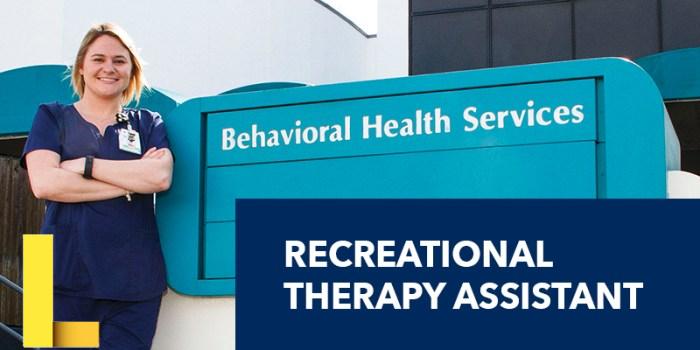
Ultimately, the role of a recreational therapy assistant extends beyond simply organizing activities; it is about creating meaningful experiences that foster resilience, promote independence, and ignite joy. By skillfully adapting and facilitating therapeutic recreation, these professionals empower patients to navigate challenges, discover new strengths, and enhance their overall well-being. Their contributions are indispensable, weaving a tapestry of support that truly enriches the lives of those they serve, leaving a lasting positive impact long after the activity concludes.
FAQ Summary
What are the typical work settings for a recreational therapy assistant?
Recreational therapy assistants often work in diverse environments, including hospitals, rehabilitation centers, nursing homes, assisted living facilities, community mental health programs, and even schools or correctional facilities, adapting their services to each unique setting.
What is the average salary range for a recreational therapy assistant?
Salaries for recreational therapy assistants can vary widely based on location, experience, education, and specific employer. Generally, entry-level positions might start lower, with experienced professionals earning more, often ranging from approximately $30,000 to $50,000 annually, though this can differ significantly.
How do recreational therapy assistants handle challenging patient behaviors during activities?
Handling challenging behaviors requires patience, empathy, and specialized training. Assistants often use de-escalation techniques, adapt activities to reduce frustration, provide clear instructions, offer choices, and collaborate with the recreational therapist and other staff to understand and address the underlying causes of such behaviors.
Is there a high demand for recreational therapy assistants?
The demand for recreational therapy assistants is generally stable, with growth projected due to an aging population and increasing recognition of holistic health benefits. Opportunities may be particularly strong in settings serving older adults or individuals with chronic conditions.
What’s the key difference between recreational therapy and occupational therapy?
While both therapies aim to improve patient well-being, recreational therapy focuses on leisure, play, and recreation to restore function and improve health. Occupational therapy, conversely, concentrates on helping patients perform daily living and work tasks, such as dressing, eating, or job-related skills, to enhance independence.

