

6 foot wooden picnic table stands as a timeless centerpiece for countless outdoor gatherings, offering a perfect blend of utility and rustic charm. More than just a piece of furniture, it embodies moments of shared meals, laughter, and connection, inviting everyone to gather around its sturdy frame.
This comprehensive guide delves into everything one needs to know about these beloved fixtures, from selecting the right lumber and mastering construction techniques to ensuring its longevity through proper maintenance and enhancing its aesthetic appeal and functionality.
Building Your 6-Foot Wooden Picnic Table

Embarking on the construction of a 6-foot wooden picnic table is a rewarding endeavor, offering a blend of practical skill development and the creation of a lasting piece for outdoor enjoyment. This guide provides a comprehensive overview of the materials, techniques, and design considerations necessary to build a sturdy and aesthetically pleasing table that will serve countless gatherings.From selecting the right lumber to understanding the nuances of structural integrity, each step contributes to the table’s longevity and stability.
The following sections delve into the specifics, ensuring that both novice and experienced builders have the foundational knowledge to successfully complete this project.
Essential Lumber Types for a Durable 6-Foot Wooden Picnic Table
Choosing the appropriate lumber is paramount for a picnic table’s durability, especially given its exposure to outdoor elements. Different wood species offer varying levels of natural resistance to rot, insects, and weathering, alongside distinct aesthetic qualities and price points. The table below details common options, highlighting their characteristics.
| Lumber Type | Durability | Cost Range | Recommended Use |
|---|---|---|---|
| Pressure-Treated Pine | Excellent resistance to rot and insects due to chemical treatment; can warp or crack if not properly sealed. | $ (Most Economical) | Ideal for budget-conscious projects where longevity in harsh outdoor conditions is a priority. Requires regular sealing. |
| Cedar (Western Red Cedar) | Naturally resistant to rot, decay, and insects; lightweight and stable with a pleasant aroma. Can be softer and dent more easily than hardwoods. | $$ (Mid-Range) | Excellent for a natural, rustic look where moderate durability and ease of working are desired. Naturally weather-resistant. |
| Redwood | Highly resistant to decay and insects; renowned for its rich color and dimensional stability. More expensive and can be harder to source in some regions. | $$$ (Premium) | Best for premium projects where natural beauty, exceptional durability, and minimal maintenance are key. Highly sought after for its longevity. |
| Douglas Fir | Good strength-to-weight ratio; moderate natural resistance to decay when treated with a sealant. Can check and split more readily than other options. | $ (Economical) | Suitable for structural components and tabletops when treated and sealed effectively. Offers a good balance of strength and affordability. |
Step-by-Step Assembly Procedure for an A-Frame 6-Foot Wooden Picnic Table
Assembling an A-frame picnic table involves a series of sequential steps that ensure structural integrity and proper alignment. Precision in cutting and fastening is crucial for a stable and long-lasting table. The following procedure Artikels the typical construction process.
- Cut All Components: Begin by accurately cutting all lumber pieces to their specified lengths for the tabletop slats, bench slats, A-frame legs, bench supports, and tabletop support beams. Labeling each piece can aid in organization.
- Assemble A-Frame Leg Assemblies: Construct the two A-frame leg assemblies. This typically involves joining two leg pieces at an angle at the top, often reinforced with a cross brace lower down. Use robust bolts and nuts for these critical connections.
- Attach Bench Supports: Secure the long bench support beams to the lower sections of the A-frame leg assemblies. These beams will run horizontally between the two A-frames and support the bench slats. Ensure they are level and parallel.
- Attach Tabletop Support Beams: Fasten the tabletop support beams (also known as stringers or stretchers) to the upper sections of the A-frame leg assemblies. These beams will run horizontally between the two A-frames and provide the foundation for the tabletop slats. Verify they are square and level.
- Install Bench Slats: Position and secure the individual bench slats onto the bench support beams. Space them evenly for comfort and drainage, using weather-resistant screws.
- Install Tabletop Slats: Lay out and attach the tabletop slats onto the tabletop support beams. Maintain consistent spacing between slats for aesthetic appeal and drainage, securing each with weather-resistant screws.
- Verify Stability and Squareness: After all major components are assembled, perform a final check for stability, squareness, and levelness. Make any necessary adjustments.
- Apply Finish: Apply a suitable outdoor sealant, stain, or paint to protect the wood from weathering and enhance its appearance. This step is critical for extending the table’s lifespan.
Critical Structural Joints and Fasteners for a Sturdy 6-Foot Wooden Picnic Table
The integrity of a picnic table hinges significantly on the quality of its structural joints and the fasteners used. For an A-frame design, specific connections are paramount for resisting lateral forces and supporting considerable weight. The following description details the visual elements of these critical components, emphasizing weather resistance.Imagine a close-up view of the junction where an A-frame leg meets a bench support beam.
Here, a heavy-duty carriage bolt is employed. The bolt head, typically rounded and smooth, sits flush against the exterior face of the A-frame leg, preventing snags and offering a clean appearance. Its square neck fits into a pre-drilled square hole, preventing the bolt from rotating as the nut is tightened. The bolt passes through both the A-frame leg and the bench support beam.
On the interior side, a flat washer is placed against the wood, distributing the pressure from the nut over a larger surface area, which helps prevent the nut from digging into and damaging the wood. Immediately following the flat washer is a lock washer, often a split-ring type, which provides tension and helps prevent the nut from loosening due due to vibrations or wood movement.
Finally, a hex nut is tightened securely onto the bolt. All these fasteners – bolts, washers, and nuts – are made from hot-dipped galvanized steel or stainless steel (e.g., 304 or 316 grade) to resist rust and corrosion in outdoor environments.Another critical joint is where the tabletop support beams attach to the upper sections of the A-frame. Similar heavy-duty carriage bolts with flat and lock washers and hex nuts are used here, ensuring a strong connection that can bear the weight of the tabletop and items placed upon it.
For added rigidity and to prevent racking (sideways movement), triangular gusset plates or diagonal braces might be integrated. These braces, typically made from smaller lumber pieces, are fastened with lag screws or structural screws at an angle between the A-frame legs and the main support beams. Lag screws, with their coarse threads and hexagonal heads, provide excellent holding power directly into the wood without needing a through-bolt.
For enduring outdoor enjoyment, a 6-foot wooden picnic table is an excellent choice. Its utility significantly increases when complemented by thoughtful overhead protection, like the diverse classic recreation shade structures available. This pairing ensures your durable wooden picnic table provides comfort and utility for countless memorable gatherings, regardless of the sun’s intensity.
The screw heads are often recessed or countersunk to prevent snagging. For all wood-to-wood connections, particularly for attaching slats, exterior-grade deck screws with a corrosion-resistant coating (e.g., ceramic coating or polymer coating) are utilized. These screws are designed to resist pull-out and withstand weather exposure without staining the wood.
“The judicious selection of weather-resistant fasteners and the precise execution of structural joints are the cornerstones of a picnic table’s enduring stability and safety.”
Common Design Variations for Tabletop and Seating Arrangements
While the fundamental A-frame picnic table offers a classic design, various modifications to the tabletop and seating arrangements can enhance functionality, aesthetics, and user comfort. These variations allow for customization to suit specific needs and preferences.
- Attached Benches: This is the most common and traditional design, where the benches are permanently fixed to the A-frame structure of the table.
- Pros: Offers inherent stability, ensures benches are always in place, and simplifies mowing around the table.
- Cons: Less flexible for seating arrangements, can be difficult for some individuals to get in and out, and the entire unit is heavy to move.
- Separate Benches: In this configuration, the tabletop stands independently on its own support structure, and the benches are separate, movable units.
- Pros: Provides maximum flexibility for seating, allowing benches to be moved for easier access or to accommodate wheelchairs. Easier to store benches separately during off-season.
- Cons: Benches can shift during use, potentially requiring more effort to keep them aligned, and may not offer the same integrated aesthetic.
- Tabletop Slat Patterns: The arrangement of the wooden slats forming the tabletop can significantly alter the table’s appearance.
- Parallel Slats: The most straightforward and common pattern, where slats run parallel to the length of the table. This offers a clean, linear look and is easy to construct.
- Wider Planks: Instead of multiple narrow slats, the tabletop can be constructed from fewer, wider planks (e.g., 2×8 or 2×10 lumber). This creates a more solid surface, reduces gaps, and offers a robust appearance.
- Herringbone Pattern: For a more decorative and intricate look, slats can be arranged in a herringbone pattern. This requires more precise cutting and fitting but results in a unique and eye-catching tabletop. It also offers excellent structural rigidity against warping.
- Seating Comfort Enhancements:
- Backrests: Adding backrests to the benches can significantly improve comfort, transforming a simple bench into a more lounge-like seating option. This typically involves extending the bench supports upwards and attaching additional slats.
- Contoured Seating: Slightly angling the bench slats or using wider, rounded edge lumber can create a more ergonomic and comfortable seating experience.
Maintaining and Protecting Your Wooden Picnic Table

Once your 6-foot wooden picnic table is built and ready for use, ensuring its longevity and aesthetic appeal becomes the next crucial step. Wood, especially when exposed to the elements, requires thoughtful maintenance and protection to withstand the rigors of outdoor living. This section will guide you through selecting appropriate finishes, effective cleaning methods, and essential preventive measures to keep your table in prime condition for many years.Proper care not only preserves the structural integrity of the wood but also maintains its natural beauty, preventing common issues like weathering, rot, and pest damage.
By understanding the best practices for maintenance, you can significantly extend the lifespan of your picnic table, making it a cherished centerpiece for countless outdoor gatherings.
Wood Finishes and Sealants for Outdoor Exposure
Choosing the right finish or sealant is paramount for protecting your wooden picnic table from sun, rain, and temperature fluctuations. Various options offer distinct advantages in terms of application, durability, and UV resistance, each designed to penetrate or coat the wood, thereby shielding it from environmental stressors. The following table provides a comparison of finishes and sealants commonly recommended for outdoor wooden furniture.
| Finish Type | Application Method | Lifespan (Years) | UV Protection Level |
|---|---|---|---|
| Penetrating Oil Finishes | Brush, rag, or sprayer; saturates wood, wipe off excess. | 1-2 | Moderate (needs regular reapplication) |
| Oil-Based Stains/Sealants | Brush or pad applicator; allows for deep color and good penetration. | 2-3 | High (pigments block UV rays effectively) |
| Water-Based Stains/Sealants | Brush, pad, or sprayer; dries quickly, easier cleanup. | 2-4 | High (often formulated with strong UV inhibitors) |
| Exterior Spar Varnish | Brush or sprayer; builds a durable film on the surface. | 3-5 | Very High (contains flexible resins and UV blockers) |
Regular inspection and timely reapplication of your chosen finish are key to continuous protection against the elements, preventing premature degradation of the wood.
A classic 6-foot wooden picnic table offers a reliable spot for any outdoor gathering. When considering where to enjoy such amenities, you might find many excellent examples within the areas overseen by coral springs park and recreation , which thoughtfully provides facilities for public enjoyment. These robust 6-foot wooden picnic tables truly enhance any park visit.
Cleaning and Stain Removal for Wooden Picnic Tables
Maintaining a clean surface is vital not only for hygiene but also for preventing the buildup of grime and organic growth that can degrade the wood over time. A systematic approach to cleaning and stain removal addresses common issues effectively, restoring the table’s appearance without causing damage.Here is a comprehensive guide for cleaning and stain removal:
- General Dirt and Grime: Begin by sweeping off any loose debris. Then, use a soft-bristle brush or sponge with a solution of mild dish soap and warm water. Scrub gently in the direction of the wood grain. Rinse thoroughly with a garden hose on a low-pressure setting, ensuring all soap residue is removed, and allow the table to air dry completely.
- Mildew and Mold: For areas affected by mildew, prepare a solution of one part household bleach to three parts water, or a mixture of equal parts white vinegar and water for a milder, eco-friendlier option. Apply the solution with a spray bottle or sponge, let it sit for 10-15 minutes, then scrub with a soft brush. Rinse thoroughly and allow to dry.
For persistent mildew, commercial wood cleaners designed to kill mold spores can be effective.
- Food Stains (Grease, Oil, Sauces): Address these stains as quickly as possible. For fresh grease, sprinkle an absorbent material like cornstarch or baking soda on the stain, let it sit for an hour to absorb the oil, then brush away. For set-in food stains, a solution of warm water and a degreasing dish soap can be effective. Scrub gently. For stubborn berry or wine stains, a paste made from oxalic acid (available at hardware stores) and water can be applied, left to sit, then scrubbed and rinsed.
Always test oxalic acid on an inconspicuous area first.
- Water Rings and Marks: Light water marks can sometimes be removed by gently rubbing with a soft cloth dampened with mineral spirits. For deeper rings, a very fine steel wool (#0000) can be used with a small amount of mineral spirits, always rubbing with the wood grain. This method should be followed by reapplication of the wood finish to the affected area.
Preventive Measures to Extend Table Life in Different Climates
Proactive measures tailored to specific climatic conditions can significantly prolong the life of your wooden picnic table, minimizing wear and tear from environmental extremes. Understanding how different climates affect wood allows for targeted protection strategies.General preventive measures include placing the table on a hard, level surface to prevent moisture wicking from the ground and covering it with a breathable, waterproof cover during extended periods of non-use, especially during harsh weather seasons.
Elevating the table slightly with small risers can also improve air circulation underneath, reducing moisture buildup.
Considerations for specific climates:
- Extreme Heat and Arid Climates: In regions with intense sun and low humidity, wood is prone to drying out, cracking, and splitting. Positioning the table in a shaded area or using an umbrella during peak sun hours is crucial. Regular application of a penetrating oil finish helps to replenish the wood’s natural oils, maintaining its flexibility and preventing excessive drying. For instance, in areas like Arizona, a table exposed to direct summer sun might require re-oiling every 6-9 months instead of annually.
- Extreme Cold and Freezing Climates: Cold temperatures, especially when combined with moisture, can lead to freezing and thawing cycles that cause wood fibers to expand and contract, resulting in cracking and finish degradation. Ideally, store the table indoors or in a sheltered area during winter months. If outdoor storage is unavoidable, ensure the table is thoroughly clean and dry before covering it with a heavy-duty, breathable cover to protect it from snow, ice, and fluctuating temperatures.
For example, a table left uncovered in Minnesota winters will show significantly more surface damage than one properly stored or covered.
- High Humidity and Rainy Climates: Persistent high humidity and frequent rainfall create an ideal environment for mold, mildew, and wood rot. In such climates, selecting a wood species naturally resistant to rot (like cedar or redwood) or ensuring the table is thoroughly sealed with a moisture-resistant finish is vital. Good air circulation around and under the table is essential; avoid placing it directly on damp ground.
Regular cleaning to remove any organic growth and checking for proper drainage around the table area can prevent long-term damage. In coastal areas of Florida, where humidity is consistently high, an annual application of a strong water-repellent sealant can prevent widespread mildew and decay.
Illustration Description: Weathered Picnic Table Undergoing Restoration, 6 foot wooden picnic table
The illustration captures a 6-foot wooden picnic table in mid-restoration, showcasing the dramatic transformation from weathered neglect to renewed beauty. The scene is set outdoors, perhaps on a patio or in a backyard, with tools and materials neatly arranged around the table.In the foreground, the table’s surface reveals a stark contrast. The left half of the tabletop and a portion of the bench on the left are distinctly weathered, displaying a dull, silvery-gray patina, indicative of prolonged exposure to sun and rain.
Fine hairline cracks and a slightly rough texture are visible, hinting at the wood’s dry state. A few darker, embedded stains, possibly from food or water, are still present in this untouched section.Moving towards the center, the process of sanding is clearly depicted. An orbital sander, held by a pair of gloved hands, is actively working on a section of the tabletop.
A sturdy 6-foot wooden picnic table serves as an ideal centerpiece for any outdoor gathering. It provides ample space for guests to enjoy delicious food and engaging conversation, much like the vibrant atmosphere experienced at willies 4th of july picnic 2. Such a durable table truly enhances the convivial spirit of any occasion.
A fine cloud of wood dust gently rises, and the sanded area beneath the tool reveals the wood’s natural, warm, honey-toned grain, a striking difference from the grayed, weathered portion. The sanded surface appears smooth and uniform, free from the previous cracks and stains. Scattered around this area are fine wood shavings and dust, testament to the sanding process.Further to the right, a section of the tabletop and the right bench illustrate the application of wood filler.
Small, darker patches of wood filler are visible, meticulously pressed into deeper cracks, knot holes, and minor imperfections in the wood. The filler, a slightly contrasting color to the freshly sanded wood, appears smooth and level with the surface, indicating it has been applied and possibly lightly sanded to prepare for staining. A small putty knife, used for filler application, rests near this section.Finally, the far right end of the table, including a portion of the tabletop and the rightmost bench, shows the initial stage of staining.
A wide, soft-bristled brush is seen applying the first coat of a rich, warm brown stain. The wet stain immediately deepens the wood’s color, bringing out the intricate patterns of the grain with enhanced clarity and depth. The stained area gleams slightly, reflecting light, and stands in vivid contrast to the raw, sanded wood, offering a glimpse of the table’s revitalized appearance.
The transformation from gray, weathered wood to vibrant, stained wood is visually compelling, emphasizing the effectiveness of each restoration step.
Final Review
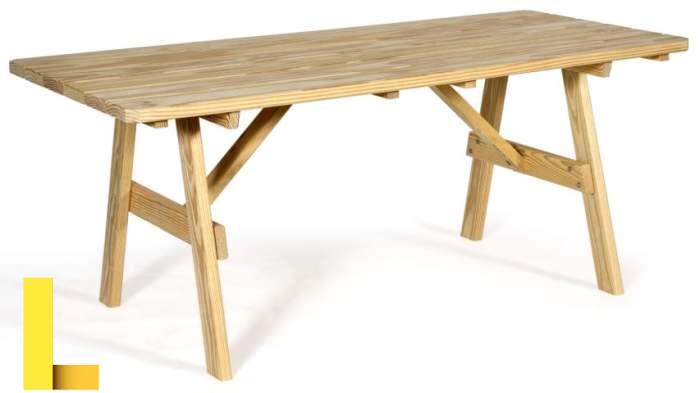
Ultimately, whether you are building one from scratch, restoring a cherished piece, or simply seeking to optimize its use, the 6 foot wooden picnic table offers endless possibilities. With thoughtful design, diligent care, and creative enhancements, it transforms from a mere structure into a vibrant hub of outdoor life, promising years of memorable experiences and enduring beauty in any setting.
Essential FAQs: 6 Foot Wooden Picnic Table
What is the average weight capacity of a 6 foot wooden picnic table?
A well-built 6-foot wooden picnic table can typically support 600-800 pounds, comfortably accommodating 6-8 adults.
Are there any eco-friendly lumber options for a wooden picnic table?
Yes, sustainable options include FSC-certified woods like cedar or redwood, or recycled lumber composites, which minimize environmental impact.
What are the essential tools needed to build a 6 foot wooden picnic table?
Basic tools include a saw (circular or miter), drill, tape measure, level, clamps, and appropriate wrenches for fasteners.
How many people can comfortably sit at a 6 foot wooden picnic table?
A 6-foot table typically seats 6-8 adults, with 3 on each bench and potentially one at each end if the design allows.

