

Coated outdoor picnic tables offer a blend of durability and aesthetic appeal, transforming ordinary outdoor spaces into inviting areas for dining and gathering. These robust furnishings are designed to withstand the rigors of nature, ensuring years of reliable service and enjoyment.
Delving into the world of protective coatings, we explore various materials that enhance longevity, from their chemical makeup to application techniques, and how they provide superior UV, moisture, and scratch resistance. We also consider eco-friendly options and essential care routines, alongside innovative designs and structural materials that define modern outdoor living.
Design and Material Innovations for Enhanced Outdoor Picnic Tables
The evolution of outdoor picnic tables extends far beyond simple functionality, embracing sophisticated design and advanced material science to deliver superior performance and aesthetic appeal. Modern innovations are transforming these communal pieces, ensuring they not only withstand the elements but also enhance user experience and complement diverse outdoor environments.This segment delves into the cutting-edge design features and material advancements that are redefining the standards for coated outdoor picnic tables.
By integrating thoughtful design with robust, resilient materials, manufacturers are crafting tables that offer unparalleled durability, comfort, and visual harmony, catering to a broad spectrum of public and private outdoor spaces.
Innovative Design Features for Enhanced User Experience
Contemporary outdoor picnic tables are increasingly incorporating intelligent design features aimed at maximizing user comfort, convenience, and inclusivity. These thoughtful additions elevate the standard picnic experience, making outdoor dining and gathering more enjoyable for everyone.
-
Integrated Seating: Moving beyond separate benches, many designs now feature seating directly attached to the table structure. This not only creates a cohesive look but also ensures stability and proper spacing. Options range from fixed benches that are part of the table frame to individual, ergonomically shaped seats that offer back support, enhancing comfort for longer periods of use.
-
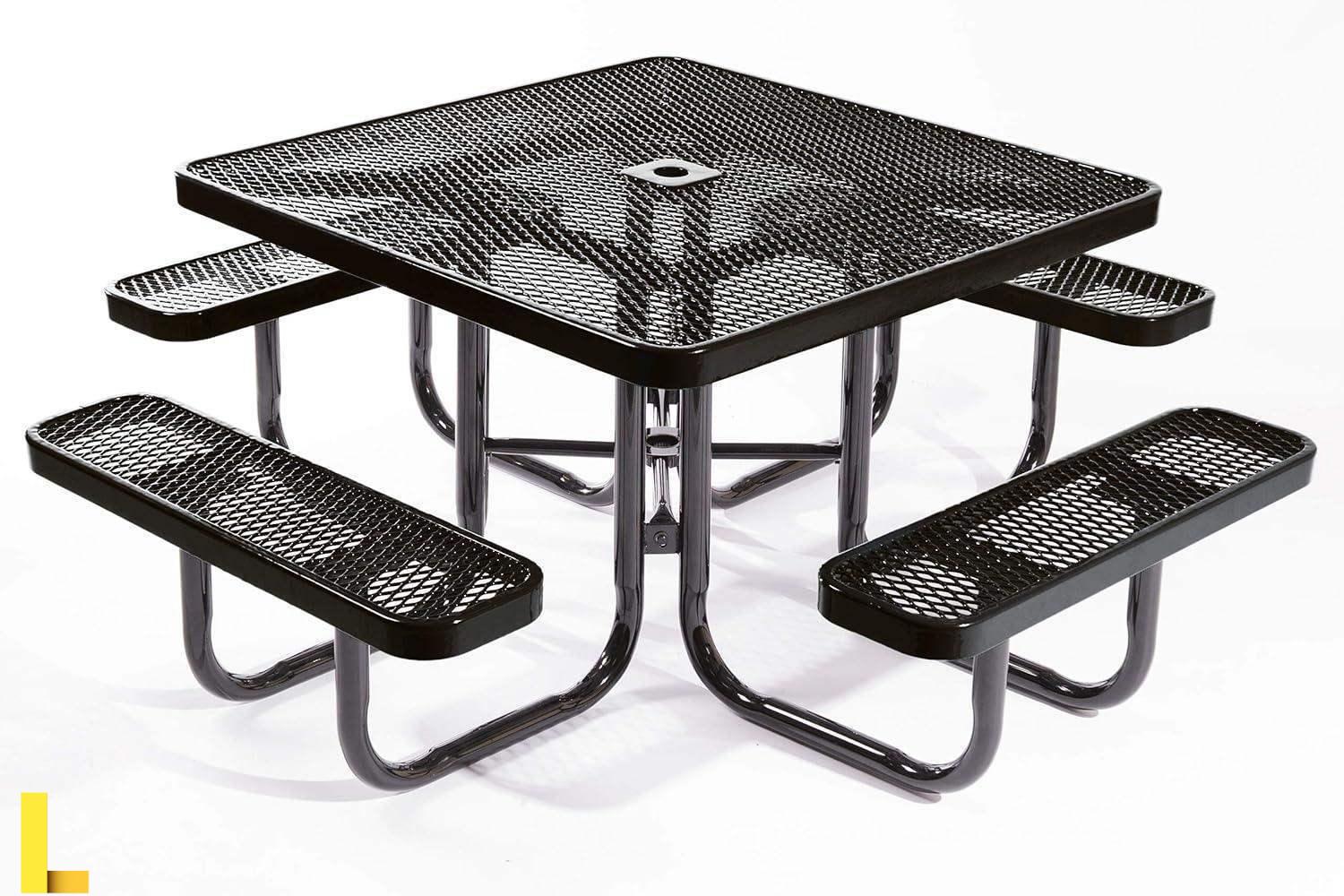
Umbrella Holes: A crucial feature for sun protection, integrated umbrella holes are standard in most modern designs. These typically accommodate standard pole sizes (e.g., 1.5 to 2 inches in diameter) and often include a reinforced base or a cap when not in use, preventing debris accumulation. Some larger tables may even feature multiple umbrella holes or offset designs to cover wider areas effectively.
Coated outdoor picnic tables provide an excellent, durable spot for various community events and family meals. Imagine gathering after a spirited search for a local recreational swim team near me , enjoying refreshments on a pristine surface. These robust tables are truly indispensable for fostering outdoor camaraderie, standing up beautifully to the elements season after season.
-
Accessibility Options: Designing for inclusivity is paramount. Accessible picnic tables often feature extended tabletops or cut-outs at one or more ends, allowing wheelchair users to comfortably roll underneath without obstruction. These designs adhere to ADA (Americans with Disabilities Act) guidelines, ensuring adequate knee and toe clearance, and often incorporate wider pathways around the table for easy maneuverability.
Comparative Analysis of Core Structural Materials
The choice of structural material is fundamental to the durability, longevity, and overall performance of an outdoor picnic table, especially before the application of protective coatings. Each material presents a unique set of advantages and disadvantages that influence its suitability for specific environments and applications.The following table Artikels common structural materials used for outdoor picnic tables, detailing their characteristics and ideal coating pairings for optimal protection and aesthetics.
Investing in quality coated outdoor picnic tables significantly enhances any recreational area. Properties managed by recreational realty llc often feature these durable assets, understanding their value in creating inviting community spaces. Such resilient tables ensure comfort and longevity for all users.
| Material | Pros | Cons | Ideal Coating Pairings |
|---|---|---|---|
| Steel | Exceptional strength and rigidity; highly durable; cost-effective for mass production; can be formed into various shapes. | Heavy, making it less portable; highly susceptible to rust and corrosion if not properly coated or maintained; can conduct heat. | Powder coating (polyester for UV resistance, epoxy for chemical resistance); thermoplastic coatings (e.g., polyethylene, PVC) for extreme durability and impact resistance; zinc-rich primers followed by topcoats. |
| Aluminum | Lightweight, offering easy portability and repositioning; naturally corrosion-resistant, even without coating; excellent strength-to-weight ratio; recyclable. | Generally more expensive than steel; can be less rigid than steel, potentially denting under heavy impact; can oxidize over time, leading to a dull finish if untreated. | Powder coating (polyester, acrylic) for color and enhanced protection; anodizing (though a surface treatment rather than a coating, it enhances hardness and corrosion resistance); liquid paints specifically formulated for aluminum. |
| Recycled Plastic | Environmentally friendly; highly resistant to rot, insects, and moisture; low maintenance (no painting or sealing required); splinter-free and safe; excellent resistance to chemicals. | Initial cost can be higher than some traditional materials; can be less structurally rigid than metals, potentially requiring more support; some formulations may fade or warp slightly in extreme, prolonged heat or UV exposure without stabilizers. | UV-stabilized formulations (often integrated during manufacturing); specialized plastic paints or coatings designed to enhance color vibrancy and provide additional UV protection, extending aesthetic life. |
Selecting the right structural material is a critical foundational decision, as it dictates the table’s inherent properties, from weight and durability to its long-term maintenance needs and ultimate environmental impact.
Aesthetic and Functional Elements of a Modern Coated Picnic Table, Coated outdoor picnic tables
Imagine a vibrant urban park on a sun-drenched afternoon, where a “CityScape” series picnic table stands as a testament to modern design and robust engineering. This ergonomically designed, coated outdoor picnic table, perhaps in a striking cerulean blue, immediately draws the eye, its smooth, sleek lines harmonizing with the surrounding lush greenery and contemporary architecture. The table’s surface, a marvel of durable powder coating, gleams softly, inviting touch and promising easy cleanup.
Its integrated seating, gently curved for optimal lumbar support, encourages relaxation and conversation, rather than the stiff posture often associated with traditional picnic benches.A central, discreetly reinforced umbrella hole hints at thoughtful consideration for user comfort during peak sun hours. The tabletop itself is generously proportioned, offering ample space for meals, board games, or a laptop for remote work, showcasing its versatility.
Its robust construction, likely steel or aluminum beneath the vibrant coating, ensures stability even during lively gatherings, while the anti-slip texture of the seating provides an extra layer of safety. The table’s design subtly incorporates accessibility features, with one end extending slightly to allow comfortable access for wheelchair users, demonstrating a commitment to inclusivity. This “CityScape” table is more than just a place to eat; it’s a focal point for community, an example of how advanced materials and ergonomic design can elevate everyday outdoor experiences into moments of comfort and connection.
Optimizing Table Selection Based on Usage and Space
Choosing the appropriate size and shape for a coated outdoor picnic table is essential for maximizing its utility and ensuring it seamlessly integrates into its intended environment. Careful consideration of both anticipated usage patterns and the physical dimensions of the available space will lead to a more functional and satisfying investment.
-
Anticipated Usage:
- Individual or Small Groups (2-4 people): For intimate settings like small patios, balconies, or coffee breaks, a compact square (e.g., 36×36 inches) or a small round table (e.g., 30-42 inch diameter) is ideal. These sizes promote close conversation and do not overwhelm limited spaces.
- Medium Groups (4-6 people): Rectangular tables ranging from 60 to 72 inches in length, or larger round/octagonal tables (e.g., 48-60 inch diameter), are well-suited for family meals or small gatherings. They provide comfortable seating without feeling cramped.
- Large Groups or Commercial Settings (6-10+ people): For parks, corporate campuses, or large family backyards, longer rectangular tables (e.g., 96 inches or more) or multiple tables arranged strategically are necessary. Consider tables with extended ends for accessibility, such as those meeting ADA standards, which typically require a minimum of 30 inches of clear space under the table for a wheelchair.
- Specific Activities: If the table is primarily for crafts, board games, or extensive work, a wider tabletop might be preferred, regardless of seating capacity.
-
Available Space:
- Footprint: Measure the exact area where the table will be placed, including an additional 3-4 feet of clearance around all sides for comfortable seating and movement. For instance, a 6-foot rectangular table requires a space roughly 10-12 feet long and 7-8 feet wide.
- Traffic Flow: Ensure the table’s placement does not obstruct pathways or access to other features like grills, gardens, or doors. In high-traffic public areas, allow even more generous clearance to accommodate multiple users moving around simultaneously.
- Surroundings: Consider how the table’s size and shape will interact with existing landscaping, structures, or views. A large, bulky table might overpower a small garden, while a too-small table could look lost in a vast open area.
-
Shape Considerations:
Durable coated outdoor picnic tables are essential for any well-equipped recreational area, offering years of maintenance-free use. For facilities looking to expand or upgrade their amenities, understanding financing options is key. Exploring resources like vantage recreational finance can provide the necessary capital, allowing for the strategic acquisition of these high-quality, weather-resistant picnic tables to enhance visitor experience.
- Rectangular: Most common, efficient for maximizing seating in a linear space, and excellent for larger gatherings. Examples include community parks where multiple rectangular tables can be aligned.
- Square: Promotes intimate conversation, as everyone is equidistant. Ideal for smaller groups and compact areas.
- Round/Oval: Encourages conversation and a sense of equality among users, as there’s no “head” of the table. Their lack of sharp corners can also be a safety advantage in areas with children. A 48-inch round table comfortably seats four.
- Octagonal/Hexagonal: Offers a unique aesthetic and can provide slightly more individual space than a round table of similar diameter, suitable for medium-sized groups seeking a distinctive look.
Wrap-Up: Coated Outdoor Picnic Tables
In essence, understanding the protective coatings, diligent maintenance, and thoughtful design innovations for coated outdoor picnic tables is key to maximizing their value and lifespan. By embracing these insights, you can ensure your outdoor gathering spaces remain beautiful, functional, and resilient against the elements for many seasons to come, truly enhancing any al fresco experience.
FAQ Insights
What is the typical lifespan of a coated outdoor picnic table?
With proper care and maintenance, a high-quality coated outdoor picnic table can last anywhere from 10 to 20 years, depending on the coating type and environmental exposure.
Are coated picnic tables safe for food contact?
Most modern coatings are designed to be non-toxic once cured, making them safe for general outdoor use. However, for direct food contact, always use placemats or serving dishes.
Can I repaint or recoat an existing coated picnic table?
Yes, many coated tables can be prepped and recoated. The process involves cleaning, light sanding, and applying a compatible new coating, which can extend its life and refresh its appearance.
Do coated tables get hot in direct sunlight?
Darker coatings, especially on metal tables, can absorb more heat and become warm to the touch in direct sunlight. Lighter colors or materials like recycled plastic tend to stay cooler.
Are there different textures available for coatings?
Absolutely. Coatings can range from smooth and glossy to matte or textured finishes, offering various aesthetic and slip-resistant properties depending on the specific product and application.

