

Recreational vehicle bill of sale serves as the cornerstone of any successful RV transaction, far more than just a piece of paper; it’s the legal bedrock securing your investment and ensuring a smooth transition of ownership. This pivotal document transforms a mere agreement into a legally binding contract, protecting both parties and establishing clear parameters for the sale of your adventurous home on wheels.
This document meticulously details the transfer of an RV from seller to buyer, encompassing vital information like vehicle identifiers, sale price, and agreed-upon conditions. It legally solidifies the transaction, differentiating itself significantly from a mere receipt by establishing clear ownership rights and responsibilities for various recreational vehicle types, from motorhomes to travel trailers, fifth-wheels, and even pop-up campers.
Understanding the Recreational Vehicle Bill of Sale Document

A Recreational Vehicle (RV) Bill of Sale serves as a crucial legal instrument in the transaction of an RV, formalizing the agreement between a buyer and a seller. This document is far more than just a simple receipt; it is the definitive proof of ownership transfer, safeguarding the interests of all parties involved and ensuring a smooth, legally sound transaction.
Primary Function and Indispensability
The recreational vehicle bill of sale acts as a legally binding contract that records the transfer of ownership of an RV from one party to another. Its primary function is to document the terms and conditions of the sale, including the identification of the buyer, seller, and the specific RV being transacted, along with the agreed-upon purchase price. For the buyer, it provides undeniable proof that they are the new legal owner, which is essential for registration, titling, and insurance purposes.
Without this document, proving ownership can become a significant challenge, leading to potential legal disputes or difficulties in obtaining necessary services for the RV. Conversely, for the seller, the bill of sale provides clear evidence that they have relinquished ownership and are no longer responsible for the vehicle, protecting them from future liabilities, such as accidents or violations occurring after the sale.
Legal Transfer of Ownership Versus a Simple Receipt
While a simple receipt merely acknowledges that a payment has been made for goods or services, an RV bill of sale explicitly details the complete transfer of legal title and ownership rights. A receipt might show the amount paid and the item purchased, but it typically lacks the comprehensive legal language and essential details required to officially change ownership in the eyes of the law and government agencies.
A bill of sale, however, includes specific clauses pertaining to the condition of the vehicle “as-is,” warranties (if any), and declarations by both parties, which are fundamental for a legitimate transfer. It serves as the foundational document upon which subsequent actions, such as vehicle registration and title issuance, are based. The absence of a properly executed bill of sale can invalidate an ownership claim, making it impossible to register the RV or secure a new title.
A recreational vehicle bill of sale transforms a monetary exchange into a definitive legal transfer of ownership, solidifying rights and responsibilities far beyond the scope of a basic payment receipt.
Types of Recreational Vehicles Requiring a Bill of Sale
A bill of sale is generally required for the transaction of most motorized and towable recreational vehicles due to their significant value, registration requirements, and the need for clear ownership records. These documents ensure that even smaller, less complex RVs have a traceable ownership history, which is vital for consumer protection and legal compliance. The following categories represent common types of recreational vehicles that necessitate a formal bill of sale for a proper transfer of ownership:
- Motorhomes: Self-propelled recreational vehicles that combine living quarters with a vehicle engine and chassis. This includes Class A (bus-style), Class B (van conversions), and Class C (cutaway chassis with an attached cab-over bunk).
- Travel Trailers: Non-motorized vehicles designed to be towed by a car, SUV, or truck, offering living accommodations. They come in various sizes and configurations, from small teardrops to large multi-axle units.
- Fifth-Wheels: A specialized type of travel trailer designed to be towed by a pickup truck equipped with a special hitch in the truck bed. They are generally larger and offer more amenities than conventional travel trailers.
- Pop-Up Campers (Folding Camping Trailers): Lightweight, collapsible trailers that expand to provide sleeping and living areas. They are characterized by their fabric or soft-sided walls that can be folded down for transport.
- Truck Campers: Recreational vehicle units that are loaded onto the bed of a pickup truck. They are designed to be removable, allowing the truck to be used independently.
- Toy Haulers: RVs (motorized or towable) that feature a “garage” area at the rear, designed to transport recreational toys like ATVs, motorcycles, or dirt bikes, alongside living quarters.
Essential Information Fields

Understanding the foundational elements of a recreational vehicle bill of sale is paramount for both buyer and seller. These essential information fields are not just formalities; they are the legal backbone of the transaction, ensuring clarity, preventing disputes, and facilitating proper registration and ownership transfer. Each piece of data serves a specific purpose, contributing to a comprehensive and legally sound document.To ensure a smooth and legally compliant transfer of ownership for a recreational vehicle, several crucial data points must be accurately recorded on the bill of sale.
The following table Artikels these fields, their descriptions, purposes, and provides example entries for better illustration.
| Field Name | Description | Purpose | Example Entry |
|---|---|---|---|
| Seller’s Full Legal Name | The complete legal name of the individual or entity selling the RV. | To legally identify the party transferring ownership and ensure they are the registered owner. | Jane M. Doe |
| Buyer’s Full Legal Name | The complete legal name of the individual or entity purchasing the RV. | To legally identify the party receiving ownership and for future registration. | John A. Smith |
| Seller’s Address | The current residential or business address of the seller. | For official communication and legal record-keeping. | 123 Main St, Anytown, CA 90210 |
| Buyer’s Address | The current residential or business address of the buyer. | For official communication, registration, and legal record-keeping. | 456 Oak Ave, Othercity, NY 10001 |
| Seller’s Contact Information | Phone number and/or email address of the seller. | For necessary communication regarding the sale or post-sale inquiries. | (555) 123-4567, jane.doe@email.com |
| Buyer’s Contact Information | Phone number and/or email address of the buyer. | For necessary communication regarding the sale, registration, or post-sale inquiries. | (555) 987-6543, john.smith@email.com |
| RV Make | The manufacturer of the recreational vehicle. | Basic identification of the vehicle’s brand. | Winnebago |
| RV Model | The specific model name or series of the recreational vehicle. | Further specific identification within the manufacturer’s lineup. | Vista 29V |
| RV Year | The model year of the recreational vehicle. | Crucial for valuation, registration, and understanding its age. | 2020 |
| Vehicle Identification Number (VIN) | The unique 17-character alphanumeric code assigned to the RV. | The definitive identifier for the vehicle, essential for title transfer, registration, and history checks. | 1G6RV33L8L1234567 |
| Odometer Reading | The mileage displayed on the RV’s odometer at the time of sale. | Indicates the vehicle’s usage, impacts valuation, and is required for registration. | 15,500 miles |
| Sale Price | The agreed-upon monetary amount for which the RV is being sold. | Establishes the financial terms of the transaction and is necessary for sales tax calculations. | $75,000.00 |
| Payment Method | How the buyer intends to pay for the RV. | Clarifies the financial transaction details and ensures both parties agree on the payment process. | Cashier’s Check |
| Date of Sale | The exact date when the ownership transfer officially occurs. | Establishes the effective date of the transaction for legal and registration purposes. | October 26, 2023 |
| Signatures | Legal signatures of both the buyer and the seller. | Indicates mutual agreement to the terms and legally binds both parties to the bill of sale. | (Signed by Jane M. Doe), (Signed by John A. Smith) |
Documenting Buyer’s and Seller’s Information, Recreational vehicle bill of sale
Accurately documenting the full legal names, addresses, and contact information of both the buyer and seller is a critical step in any recreational vehicle transaction. This information forms the foundation of the legal agreement, ensuring that all parties involved are clearly identified and can be reached if necessary.
- Full Legal Names: The inclusion of full legal names, exactly as they appear on government-issued identification, is essential. This prevents any ambiguity regarding the parties involved and ensures that the individuals signing the document are the rightful owners and purchasers. For instance, if the RV is owned by a trust or a business, the legal name of that entity must be used.
- Addresses: Current residential or business addresses are vital for official correspondence and legal notices. These addresses are often required for state vehicle registration processes and can be crucial for resolving any post-sale disputes or delivering legal documents.
- Contact Information: Providing reliable contact information, such as phone numbers and email addresses, facilitates communication throughout the transaction and beyond. This allows for follow-up questions, coordination for title transfer, or addressing any unforeseen issues that might arise.
“The accuracy of buyer and seller identification on a bill of sale is not merely administrative; it is the bedrock for establishing legal accountability and facilitating the official transfer of ownership.”
Identifying the Recreational Vehicle
The specific identification of the recreational vehicle being sold is paramount to prevent fraud, ensure the correct vehicle is transferred, and facilitate proper registration. Without precise identifiers, there could be confusion, leading to legal complications or difficulties in titling the vehicle.
- Vehicle Identification Number (VIN): The VIN is a unique 17-character alphanumeric code that serves as the RV’s fingerprint. It is absolutely crucial for confirming the vehicle’s identity, verifying its history (e.g., through a VIN check for accidents, liens, or recalls), and is a mandatory field for title and registration purposes. A correct VIN ensures that the specific RV intended for sale is the one being legally transferred.
- Make, Model, and Year: These details provide fundamental descriptive information about the RV. The make identifies the manufacturer (e.g., Thor Motor Coach), the model specifies the particular line or series (e.g., Four Winds), and the year indicates its production year. This information is vital for valuation, insurance purposes, and helps confirm that the buyer is receiving the exact type of RV they expect.
- Odometer Reading: The current odometer reading at the time of sale is a critical piece of information, particularly for motorhomes. It indicates the mileage or hours of use, which directly impacts the RV’s value and condition assessment. Accurately documenting this reading protects both parties against misrepresentation regarding the vehicle’s usage and is a standard requirement for state registration and titling agencies.
“A precise Vehicle Identification Number (VIN) is the unequivocal link between the bill of sale and the physical recreational vehicle, making it indispensable for legal clarity and fraud prevention.”
Sale Price, Payment, and Conditions
Clearly outlining the financial aspects and any specific conditions of the sale on the bill of sale is essential for a transparent and legally binding transaction. This section details the monetary agreement and any other stipulations that both parties have agreed upon, preventing future misunderstandings.
- Sale Price: The exact agreed-upon sale price must be explicitly stated in both numerical and written form to avoid any ambiguity. This figure is fundamental for calculating sales tax, if applicable, and serves as the official record of the transaction’s financial value. Any discrepancies here could lead to significant disputes.
- Payment Method: Specifying how the payment will be made (e.g., cash, cashier’s check, personal check, bank transfer, or financed loan) provides clarity for both parties. It Artikels the agreed-upon process for the transfer of funds, which is crucial for the seller to confirm receipt of payment and for the buyer to document their payment.
-
Agreed-Upon Conditions of Sale: This field allows for the inclusion of any specific terms or agreements pertinent to the transaction. A common condition for used RVs is an “as-is” clause, indicating that the buyer accepts the vehicle in its current condition without any implied warranties from the seller. Other conditions might include the inclusion of specific accessories, a short inspection period, or details regarding any agreed-upon repairs prior to sale.
A comprehensive recreational vehicle bill of sale is crucial for establishing clear ownership and a smooth transaction. To truly enhance your RV lifestyle and find inspiration for memorable trips, exploring insights from smile recreation can be incredibly beneficial. Always ensure your recreational vehicle bill of sale is meticulously completed for legal security.
These conditions protect both parties by documenting mutual understandings beyond the basic transfer of ownership.
Legal Significance and Protection: Recreational Vehicle Bill Of Sale

The recreational vehicle bill of sale transcends a mere receipt; it is a fundamental legal document that solidifies the transaction between buyer and seller. Its proper execution is paramount, establishing clear terms and offering a robust layer of protection against potential disputes that may arise post-sale. This document serves as an official record, ensuring both parties understand and agree upon the specifics of the transfer, thereby mitigating future misunderstandings and legal challenges.
Protection for Both Parties
A well-drafted and properly signed bill of sale is an indispensable tool for safeguarding the interests of both the buyer and the seller in an RV transaction. It meticulously Artikels the agreed-upon terms, creating a clear and legally binding record of the exchange.
- For the buyer, the bill of sale unequivocally proves ownership of the RV, which is essential for registration, insurance, and future resale. It also documents the purchase price, any specific conditions of sale (such as “as-is” clauses or agreed-upon repairs), and the date of transfer. This clarity helps protect the buyer from claims of prior ownership or undisclosed encumbrances.
- The seller benefits significantly by having a formal record that verifies the transfer of ownership and liability for the RV. Once the bill of sale is executed, the seller can demonstrate they are no longer responsible for the vehicle, its maintenance, or any incidents that occur after the sale date. This protection is crucial for avoiding unwarranted claims related to accidents, parking tickets, or other legal responsibilities that could arise after the RV has changed hands.
Bill of Sale as Crucial Evidence
In the event of a disagreement or legal challenge, a properly executed recreational vehicle bill of sale becomes an invaluable piece of evidence, often serving as the primary document to support claims or defend against allegations. Its detailed information provides a factual basis for resolving disputes.
- Consider a scenario where the original owner claims the RV was never fully paid for, or a third party asserts ownership. A bill of sale clearly stating the full purchase price and transfer of title provides irrefutable proof that the transaction was completed and ownership legitimately transferred to the buyer. Without it, resolving such a dispute can become complex and rely heavily on circumstantial evidence.
- If a buyer later claims the RV was misrepresented (e.g., mileage was incorrect, or a major defect was hidden), the bill of sale can be pivotal. If the document explicitly states the RV was sold “as-is” with no warranties, it strengthens the seller’s defense. Conversely, if specific conditions or warranties were agreed upon and noted in the bill of sale, the buyer has clear grounds for recourse.
- Imagine an RV is involved in an accident or incurs parking violations shortly after a private sale, but before the new title is fully processed. The seller could be held liable if they cannot prove the exact date and time of sale. The bill of sale, with its recorded date and signatures, acts as definitive proof that the vehicle was no longer the seller’s responsibility at the time of the incident.
Consequences of an Incomplete Bill of Sale
Neglecting to properly complete or obtain a bill of sale for a recreational vehicle can lead to a cascade of legal and administrative complications for both parties, potentially resulting in significant financial burdens and legal challenges. The absence of this document creates a void of official record, leaving crucial aspects of the transaction open to interpretation and dispute.
- Without a valid bill of sale, the buyer may face significant hurdles when attempting to transfer the RV’s title into their name. Motor vehicle departments typically require proof of purchase to process title transfers, and an incomplete or missing bill of sale can delay or even prevent this essential step, leaving the buyer without legal ownership.
- Proper registration is contingent upon legal ownership. If the title cannot be transferred due to a missing bill of sale, the buyer will be unable to register the RV, making it illegal to operate on public roads. This can lead to fines, impoundment, and insurance complications, as most insurance companies require proof of registration and ownership.
- For the seller, failing to document the sale properly means they could remain legally responsible for the RV. If the new owner is involved in an accident, incurs fines, or abandons the vehicle, the seller might still be listed as the owner on official records, potentially making them liable for damages, penalties, or towing and storage fees.
- Both parties lose significant legal standing without a bill of sale. If a dispute arises regarding payment, vehicle condition, or ownership, there is no formal document to refer to, making it incredibly difficult to prove claims or defend against accusations in court. This absence of evidence can lead to protracted legal battles and unfavorable outcomes.
“A meticulously executed recreational vehicle bill of sale is not merely a formality; it is the cornerstone of a secure transaction, legally binding the terms and providing an indisputable record of ownership transfer and liability.”
The Transaction Process

Navigating the sale or purchase of a recreational vehicle requires a clear, systematic approach to ensure a smooth and legally sound transfer of ownership. The bill of sale acts as the cornerstone of this transaction, formalizing the agreement between the buyer and seller. Understanding each phase of the process, from documentation to the exchange of assets, is crucial for both parties to protect their interests and comply with legal requirements.
Step-by-Step Procedure for Completing and Signing
The completion and signing of a recreational vehicle bill of sale is a critical juncture in the transaction, formalizing the agreement between the buyer and seller. Adhering to a structured procedure ensures accuracy, legal compliance, and clarity for all involved parties. This methodical approach helps prevent future disputes and establishes a clear record of the transfer of ownership.
-
Initial Agreement: Before drafting the bill of sale, both the buyer and seller must agree on the final purchase price, the specific recreational vehicle (make, model, year, VIN), and any conditions of sale (e.g., “as-is” condition, included accessories). This preliminary understanding forms the basis for the formal document.
-
Gathering Necessary Information: Both parties need to provide their full legal names, current addresses, and contact information. The seller must also furnish all pertinent details about the RV, including the Vehicle Identification Number (VIN), odometer reading, make, model, year, and any distinguishing features or modifications. It is essential to ensure the VIN on the bill of sale matches the VIN on the RV itself and its title document.
-
Filling Out the Bill of Sale Form: Carefully complete all fields on the bill of sale. This includes the agreed-upon purchase price, the date of the transaction, and any specific terms or conditions. Any discrepancies or blank fields could lead to complications later. If a separate addendum is used for additional terms, it should be referenced within the main bill of sale and attached.
-
Review and Verification: Before signing, both the buyer and seller should thoroughly review the entire document. Verify that all information is accurate, including personal details, RV specifications, and the purchase price. This is the opportunity to catch any errors or omissions that could invalidate the agreement or cause legal issues.
-
Signing the Document: Once reviewed and verified, both the buyer and seller must sign the bill of sale. The date of signing should also be clearly indicated. In some jurisdictions or for certain types of RVs, signatures may need to be made in the presence of witnesses or a notary public, as discussed further below.
-
Making Copies: After signing, multiple copies of the fully executed bill of sale should be made. Both the buyer and seller should retain an original signed copy for their records. Additional copies may be required for registration with the Department of Motor Vehicles (DMV) or equivalent state agency, insurance purposes, or for lenders if financing is involved.
Role of Witnesses or Notarization
The inclusion of witnesses or the notarization of a recreational vehicle bill of sale adds an extra layer of legal security and authenticity to the transaction. While not universally mandated for all RV sales, understanding their purpose and when they are required is vital for ensuring the document’s validity and enforceability. These services can significantly strengthen the legal standing of the bill of sale, particularly in cases of dispute.
Some states or specific circumstances, such as transactions involving high-value RVs or sales between parties who do not know each other, may legally require a bill of sale to be witnessed or notarized. Even when not legally mandated, obtaining these services offers significant benefits:
-
Witnesses: A witness attests to the identities of the signing parties and confirms that the signatures were made willingly and knowingly. Their presence can be invaluable in resolving future disputes regarding the authenticity of signatures or the terms of the agreement. A witness should be a disinterested third party, meaning they are not directly involved in the transaction or benefiting from it.
-
Notarization: Notarization involves a public official, a notary public, verifying the identities of the signers and confirming that they signed the document voluntarily. The notary then affixes their official seal and signature, which provides a strong presumption of authenticity and can make the document more readily accepted in legal proceedings. Notarized documents carry significant legal weight and are often required for titling and registration in various states.
To obtain notarization services, individuals can typically visit:
-
Banks and credit unions, where many offer notary services to their customers.
-
Mail service centers and shipping stores, such as UPS Store or FedEx Office, which often have notaries on staff.
-
Law offices or real estate agencies, though they may charge a fee for non-client services.
-
Independent notary publics, who can be found through online directories or local business listings.
It is prudent for both buyer and seller to inquire about state-specific requirements for RV sales, as these regulations dictate whether witnesses or notarization are mandatory or simply recommended for added protection.
Exchanging Payment and Keys
The simultaneous exchange of payment, keys, and critical documentation is the physical culmination of the RV sale. This phase requires careful coordination to ensure both parties receive what they are owed and that the transfer of ownership is complete and secure. Adopting secure practices for payment and ensuring all relevant items are exchanged minimizes risks for both the buyer and seller.
When exchanging payment for the recreational vehicle, security should be the top priority. Cashier’s checks, also known as bank checks, are a common and generally secure method, as the funds are guaranteed by the issuing bank. Other secure payment options include:
-
Wire Transfers: These provide a direct and traceable transfer of funds from the buyer’s bank to the seller’s bank. It is crucial to verify the seller’s banking details meticulously to prevent misdirection of funds.
-
Escrow Services: For higher-value transactions, an escrow service can hold the payment until all conditions of the sale are met and all documents are properly transferred. This provides a neutral third party to manage the exchange, reducing risk for both sides.
Upon receipt and verification of payment, the seller should hand over all keys to the RV, including spares. Simultaneously, the buyer should receive the following essential documents:
-
The original, signed recreational vehicle bill of sale.
-
The vehicle’s clear title (certificate of ownership), properly signed over by the seller. This is perhaps the most critical document for proving ownership and registering the RV.
-
Any existing maintenance records, service history, and owner’s manuals. These documents provide valuable insight into the RV’s past care and operation.
-
Proof of emissions testing or safety inspections, if required by the state for transfer of ownership.
-
A receipt for the payment made, especially if a cashier’s check or cash was used, providing an additional record of the financial transaction.
Securing a comprehensive recreational vehicle bill of sale is fundamental when acquiring your next RV. For those investigating various models and pricing, resources like recreation plantation rv sales offer valuable insights into available units. Ultimately, a meticulously prepared recreational vehicle bill of sale solidifies ownership and outlines the terms of your purchase clearly.
Both parties must ensure they walk away with their respective original copies of the signed bill of sale and any payment receipts. The buyer should immediately begin the process of registering the RV in their name and obtaining insurance coverage.
Illustrative Transaction Scenario
To vividly demonstrate a well-executed RV transaction, consider the hypothetical sale of a 2018 Winnebago Minnie Winnie by Sarah, the seller, to Mark, the buyer. This scenario highlights the key interactions and documentation exchanges that contribute to a smooth and legally sound transfer of ownership.
A comprehensive recreational vehicle bill of sale secures your investment, paving the way for countless adventures. Picture enjoying a serene lakeside evening, perhaps even donning a charming white picnic dress for a relaxed outdoor gathering. Such delightful moments are truly earned by ensuring all the legalities surrounding your recreational vehicle bill of sale are impeccably handled from the start.
Sarah, having meticulously maintained her RV, listed it for sale. Mark, after extensive research and an initial phone conversation, arranged to view the vehicle. During the viewing, Mark conducted a thorough inspection, test drove the RV, and reviewed Sarah’s detailed maintenance records. He also performed a VIN check to confirm the RV’s history and ensure there were no liens. After some negotiation, they agreed on a price of $65,000.
On the day of the transaction, Sarah and Mark met at a local bank that offered notary services, as required by their state for RV title transfers. Before their meeting, Sarah had already filled out her portion of the bill of sale, including the RV’s VIN, odometer reading (45,000 miles), make, model, and year. Mark brought a cashier’s check for the agreed-upon amount, made out to Sarah’s full legal name.
At the bank, they sat down to finalize the paperwork. Sarah presented the blank title, ready for endorsement. First, Mark carefully reviewed the pre-filled bill of sale, confirming all details were accurate. He then filled in his personal information as the buyer. The bank’s notary public verified both Sarah’s and Mark’s identities using their driver’s licenses.
In the notary’s presence, Sarah and Mark both signed the bill of sale. The notary then affixed her official seal and signature, attesting to the authenticity of the signatures.
Next, Sarah endorsed the RV’s title, signing it over to Mark as the new owner. She then handed Mark the original signed bill of sale, the endorsed title, all sets of keys for the RV, and a binder containing all maintenance receipts and the owner’s manual. In return, Mark handed Sarah the cashier’s check. Sarah immediately took the check to a teller to deposit it and obtained a deposit receipt for her records.
Before leaving, Mark made sure he had his original signed copy of the bill of sale, the endorsed title, and all the keys and documents. Sarah retained her original signed copy of the bill of sale and the deposit receipt for the payment. This systematic approach, including the use of a secure payment method and a notary, ensured a transparent and legally compliant transfer of the RV, leaving both parties confident in the integrity of their transaction.
Key Considerations and Best Practices for RV Bill of Sale
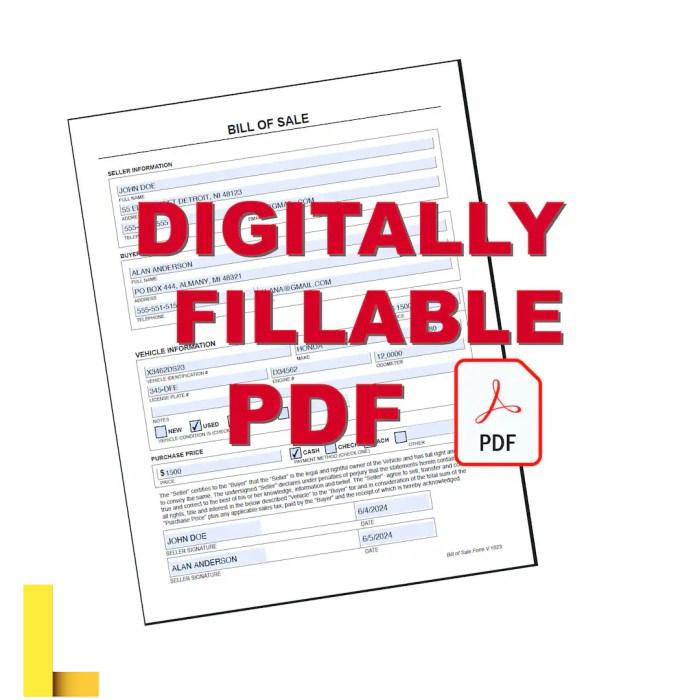
Navigating the sale or purchase of a recreational vehicle involves more than just agreeing on a price; it critically depends on understanding the legal framework surrounding such transactions. The bill of sale, while a foundational document, is often influenced by specific state regulations, necessitating careful attention to local laws to ensure a smooth and legally sound transfer of ownership. This section delves into how state laws shape the RV bill of sale and Artikels essential practices for compliance.
State Laws Influencing RV Bill of Sale Content and Execution
The content and execution requirements for a recreational vehicle bill of sale are not universally standardized; they are significantly shaped by the individual laws of each state. While a basic bill of sale template covers fundamental information, state statutes dictate specific additions, disclosures, and procedural steps that must be adhered to for the document to be legally binding and effective for title transfer.
Ignoring these state-specific mandates can lead to delays, legal complications, or even invalidate the transaction. For instance, some states might require specific wording regarding the condition of the RV, while others focus on how the document is presented to the Department of Motor Vehicles (DMV) or equivalent agency.
Common State-Specific Additions and Modifications
Different states often introduce unique elements into what might otherwise be a standard RV bill of sale. These additions or modifications are designed to protect consumers, ensure proper tax collection, or streamline the vehicle registration process within that jurisdiction. Understanding these variations is crucial for both buyers and sellers to prevent issues during the title transfer and registration process.Below are common state-specific additions or modifications you might encounter:
- Notarization Requirements: While not universally required for a bill of sale, many states, such as Arizona or Kentucky for certain vehicle types, mandate notarization to verify the identities of the buyer and seller and to attest to the authenticity of their signatures. This adds an extra layer of legal security to the transaction.
- Odometer Disclosure Statements: Although a federal requirement for most vehicles under 10,000 pounds and less than 10 years old, many states integrate specific odometer disclosure language directly into their official bill of sale or require a separate state-specific form. California, for example, has detailed requirements for odometer statements to combat fraud.
- Sales Tax Declarations: Some states require the sales price to be explicitly stated for sales tax calculation directly on the bill of sale, or for a separate sales tax form to accompany it. States like Florida clearly Artikel sales tax responsibilities and collection on vehicle sales.
- “As-Is” Clauses and Warranty Disclaimers: If an RV is being sold without any warranty, states often have specific legal language that must be included in the bill of sale to effectively disclaim implied warranties. For instance, many states require the phrase “AS IS, WHERE IS, WITHOUT WARRANTY OF ANY KIND” in a prominent manner to be legally enforceable.
- Lien Holder Information: If there is an outstanding lien on the RV, some states require the bill of sale to include details of the lien holder and acknowledge how the lien will be satisfied or released, particularly if the sale involves the payoff of an existing loan.
- Specific Disclosure Forms: Beyond the bill of sale, certain states might require additional disclosure forms for specific issues, such as salvage titles, flood damage, or structural modifications, to be provided to the buyer.
Researching and Understanding Local Regulations for RV Sales
Given the variability of state laws, both buyers and sellers must conduct due diligence to ensure their RV bill of sale complies with local regulations. This proactive approach safeguards against legal disputes and facilitates a smooth transfer of ownership. Accessing accurate, up-to-date information is straightforward with the right resources.
“Thorough research into state-specific RV sale requirements is not merely a recommendation; it is an indispensable step to ensure legal compliance and protect the interests of all parties involved in the transaction.”
To effectively research and understand local regulations, consider the following steps:
- Consult the State Department of Motor Vehicles (DMV) or Equivalent Agency: The official website of your state’s DMV (or Department of Revenue, Secretary of State, etc., depending on the state) is the primary and most reliable source for information on vehicle sales, title transfers, and registration. These sites often provide downloadable forms, detailed guides, and FAQs specific to RVs. For example, the Texas Department of Motor Vehicles offers comprehensive guides on vehicle transfers, including requirements for bills of sale and title applications.
- Review State Statutes: For a deeper understanding, one can access the state’s legislative website to review the specific statutes governing vehicle sales, consumer protection, and contract law. While this might be more complex, it provides the definitive legal text.
- Utilize Official State-Provided Forms: Many states offer official bill of sale templates or forms directly through their DMV websites. Using these forms is often the easiest way to ensure all necessary state-specific information is included, as they are designed to meet local legal requirements.
- Seek Professional Legal Advice: For complex transactions, or if there are any uncertainties regarding state laws, consulting with an attorney specializing in vehicle or contract law can provide invaluable guidance and ensure full compliance. This is particularly advisable when dealing with high-value RVs, cross-state transactions, or unique circumstances.
- Check County or City-Specific Requirements: While less common for the bill of sale itself, some local jurisdictions might have specific requirements related to property taxes or other local fees that could indirectly impact the overall transaction process.
Summary

Ultimately, mastering the recreational vehicle bill of sale process is paramount for both parties, transforming a potentially complex transaction into a clear, legally sound exchange. By understanding its critical components, ensuring meticulous execution, and adhering to post-sale protocols, you safeguard your interests and pave the way for many happy adventures on the open road. It’s more than a formality; it’s your peace of mind and the foundation for countless future journeys.
FAQ Compilation
Is a bill of sale required in all states for RVs?
While highly recommended and generally considered best practice, specific requirements vary by state. Some states mandate it for title transfer, while others might accept other forms of proof of ownership. Always check your local Department of Motor Vehicles (DMV) regulations.
Can I use a generic bill of sale template for an RV?
It is advisable to use a template specifically designed for vehicle sales, or better yet, one tailored for RVs, as these often include fields for VIN, odometer, and specific “as-is” clauses relevant to vehicles. Generic templates might lack crucial legal details necessary for a proper RV transfer.
What if the RV has multiple owners?
All legal owners listed on the title must typically sign the bill of sale as sellers to effect a complete transfer of ownership. Similarly, if multiple buyers are acquiring the RV, all should be listed and sign as buyers to ensure clear ownership and responsibility.
Do I need a bill of sale if the RV is a gift?
Yes, even if an RV is a gift, a bill of sale (often called a “gift bill of sale”) is crucial. It documents the transfer of ownership, establishes the vehicle’s value (often zero for gifts), and is usually required for title and registration purposes, helping to avoid potential tax implications or future disputes.
What if the odometer reading is inaccurate or unknown?
If the exact odometer reading is unknown or believed to be inaccurate, this must be clearly stated on the bill of sale. Common phrases include “actual mileage unknown” or “not actual mileage.” Failing to disclose this can lead to significant legal issues for the seller.

