

Recycled plastic picnic tables are emerging as a remarkably innovative and sustainable solution for outdoor furnishing, transforming discarded materials into durable and aesthetically pleasing amenities. This shift represents a significant stride towards environmental stewardship, offering a compelling alternative to traditional options while promoting a circular economy.
These tables are meticulously crafted from various post-consumer and post-industrial plastics, undergoing a sophisticated manufacturing process that ensures robust structural integrity and longevity. Beyond their eco-friendly origins, they offer exceptional practical advantages, including superior weather resistance and minimal maintenance. Furthermore, their design versatility allows for a wide array of styles and customization, ensuring suitability for diverse settings and preferences throughout their extended lifecycle.
The Composition and Creation of Recycled Plastic Picnic Tables

The journey of a recycled plastic picnic table begins long before its assembly, stemming from a commitment to sustainability and innovative material science. These durable outdoor furnishings represent a significant advancement in transforming waste into valuable, long-lasting products, offering a robust alternative to traditional materials while reducing environmental impact.
Utilized Plastic Types in Recycled Picnic Tables
The foundation of recycled plastic picnic tables lies in a diverse array of plastic waste, carefully selected and processed to ensure the final product’s integrity and performance. This typically includes both post-consumer and post-industrial plastics, each contributing unique properties to the composite material.
- High-Density Polyethylene (HDPE): Commonly sourced from milk jugs, detergent bottles, and other rigid containers, HDPE provides excellent stiffness, strength, and chemical resistance, making it a primary component.
- Low-Density Polyethylene (LDPE): Often derived from plastic bags, film packaging, and flexible lids, LDPE contributes to the material’s flexibility and impact resistance, enhancing its resilience against bumps and drops.
- Polypropylene (PP): Found in yogurt containers, bottle caps, and automotive parts, PP offers good heat resistance, rigidity, and fatigue resistance, which is beneficial for structural components.
- Post-Industrial Scrap: This category includes manufacturing waste such as off-cuts, trimmings, and rejected parts from various plastic production processes. Utilizing these materials prevents them from entering landfills directly and ensures a consistent quality stream.
The Manufacturing Process of Recycled Plastic Picnic Tables
The transformation of discarded plastics into functional picnic tables involves a meticulously engineered process, ensuring material purity, consistency, and structural integrity. Each step is crucial for producing a high-quality, durable end product.
- Collection and Sorting: Plastics are collected from various sources, including municipal recycling programs, commercial waste streams, and industrial facilities. They are then rigorously sorted, often using automated optical sorters and manual checks, to separate different plastic types and remove contaminants like paper labels, metal, or other non-plastic materials.
- Cleaning and Shredding: The sorted plastics undergo a thorough washing process to remove any remaining dirt, food residues, or chemicals. Following cleaning, the plastics are shredded into small flakes, known as “regrind” or “fluff,” which facilitates further processing and ensures uniform melting.
- Melting and Compounding: The plastic flakes are fed into extruders where they are melted down at precise temperatures. During this stage, the molten plastic is often compounded with UV stabilizers, colorants, and other additives to enhance its weather resistance, appearance, and overall performance. This mixture is then typically extruded into uniform pellets, creating a consistent raw material.
- Extrusion or Molding of Components: The plastic pellets are fed into specialized machinery for forming the table components.
- Extrusion: For long, linear components like planks and beams, the molten plastic is pushed through a die to create continuous profiles. These profiles are then cut to the required lengths.
- Molding (Injection or Compression): For more complex shapes such as table legs, braces, or end caps, injection molding (where molten plastic is injected into a mold cavity) or compression molding (where heated plastic is pressed into a mold) techniques are employed.
- Cooling and Finishing: Once formed, the plastic components are carefully cooled, often in water baths or by air, to solidify them and maintain their dimensional stability. After cooling, components may undergo additional finishing processes such as trimming, drilling holes for assembly, or surface treatments to achieve the desired final appearance and fit.
Structural Properties and Engineering for Durability
The inherent properties of recycled plastic, combined with thoughtful engineering, contribute significantly to the strength, stability, and remarkable longevity of these picnic tables. Unlike wood, recycled plastic does not rot, splinter, or require regular painting, making it exceptionally low-maintenance and resistant to environmental degradation.
Engineers leverage the material’s density, impact resistance, and uniform composition to design structures that withstand heavy use and diverse weather conditions. The homogeneous nature achieved during the compounding phase ensures consistent mechanical properties throughout the material, preventing weak points often associated with natural lumber’s grain patterns. Furthermore, the material’s non-absorbent quality prevents water damage, fungal growth, and insect infestation, which are common issues for wooden alternatives.
The design often incorporates thicker profiles and strategic bracing to distribute loads effectively and prevent sagging over time. For enhanced structural integrity in larger or heavily used tables, internal steel reinforcements can sometimes be integrated within the plastic lumber profiles, offering superior bending strength without compromising the plastic’s exterior benefits.
“The engineering of recycled plastic components focuses on maximizing the material’s inherent resistance to environmental degradation and achieving structural stability that often surpasses traditional outdoor furniture materials.”
The chemical stability of the plastic, especially with added UV inhibitors, means the tables resist fading and material breakdown from prolonged sun exposure. This meticulous approach to material selection, processing, and structural design ensures that recycled plastic picnic tables deliver exceptional durability and a significantly extended service life.
Illustration: A Newly Manufactured Recycled Plastic Picnic Table
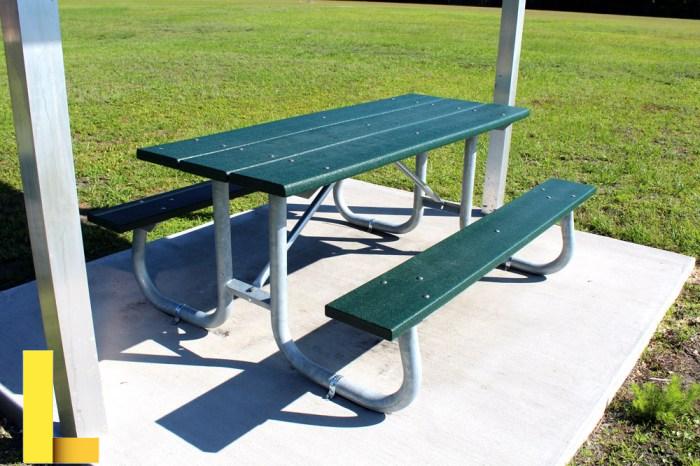
Imagine a newly manufactured recycled plastic picnic table, standing robust and inviting under a clear sky. Its surface presents a subtle, finely textured matte finish, reminiscent of brushed wood but without any splinters or rough edges. The texture is consistent, offering a pleasant tactile experience that hints at its durability. The table’s color might be a deep, earthy forest green, or perhaps a warm, inviting cedar brown, subtly speckled with tiny, almost imperceptible flecks of lighter or darker plastic.
These minute variations are a tell-tale sign of its recycled origins, adding a unique character without detracting from its uniform appearance. The edges are smoothly chamfered, and all visible fasteners are recessed, contributing to its clean lines and safe, user-friendly design. The planks forming the tabletop and benches are substantial, visibly thick and solid, conveying an immediate sense of unwavering strength.
The legs and support beams are equally robust, presenting a block-like, unwavering form that promises exceptional stability. There’s a subtle, almost imperceptible sheen in direct sunlight, indicating the material’s inherent resistance to moisture and its ease of cleaning. The overall impression is one of unwavering resilience, a piece of outdoor furniture built to withstand the elements and years of joyful gatherings, embodying both environmental responsibility and practical elegance.
Practical Benefits and Diverse Applications

The adoption of recycled plastic picnic tables extends far beyond mere functionality, offering a compelling array of practical benefits and opening up diverse application possibilities across various settings. These tables represent a forward-thinking choice that aligns with both environmental stewardship and long-term economic prudence, providing robust solutions where traditional materials often fall short.Choosing recycled plastic for outdoor furniture is a significant step towards a more sustainable future, contributing positively to environmental health in multiple ways.
This material choice actively supports the circular economy by diverting waste from landfills and reducing the demand for virgin resources, embodying a commitment to ecological responsibility.
Environmental Advantages of Recycled Plastic
Opting for picnic tables made from recycled plastic offers substantial environmental advantages, contributing significantly to sustainability efforts and resource conservation. These benefits highlight the material’s role in mitigating environmental impact compared to alternatives.
- Waste Diversion: Utilizes post-consumer and post-industrial plastic waste, preventing it from accumulating in landfills or polluting natural environments. This directly reduces the volume of non-biodegradable materials requiring disposal.
- Resource Conservation: Decreases the need for new raw materials such as timber, which protects forests and their vital ecosystems, or the energy-intensive mining of metal ores. This preserves natural resources for future generations.
- Reduced Carbon Footprint: Manufacturing products from recycled plastic typically requires less energy than producing new plastic from virgin fossil fuels. This leads to a lower overall carbon footprint and reduced greenhouse gas emissions associated with production processes.
- Pollution Mitigation: By reducing the production of virgin plastics, it helps to lessen the chemical pollution and energy consumption inherent in petroleum extraction and refining processes.
- Long-term Durability: The inherent longevity of recycled plastic products means they need to be replaced less frequently, further reducing the environmental impact associated with manufacturing and disposal over time.
Comparative Performance: Recycled Plastic, Wood, and Metal
Understanding the performance characteristics of different materials is crucial when selecting outdoor furniture. Recycled plastic offers distinct advantages in terms of weather resistance, maintenance, and lifespan when compared to traditional wood and metal options. The following table provides a clear comparison:
| Feature | Recycled Plastic | Wood | Metal |
|---|---|---|---|
| Weather Resistance | Exceptional; impervious to moisture, rot, insects, and UV degradation. Maintains integrity in extreme temperatures. | Vulnerable to rot, warping, splintering, and insect infestation when exposed to elements. Requires sealing/treatment. | Prone to rust and corrosion, especially in humid or coastal environments. Can become very hot or cold. |
| Maintenance Requirements | Very low; requires only occasional cleaning with soap and water. No painting, staining, or sealing needed. | High; regular sanding, staining, sealing, or painting is necessary to prevent decay and maintain appearance. | Moderate; requires periodic cleaning and rust treatment or repainting to prevent corrosion and maintain aesthetics. |
| Expected Lifespan | Very long (20+ years); often comes with substantial warranties due to its inherent durability and resistance to degradation. | Moderate (5-15 years); lifespan is highly dependent on wood type, treatment, and consistent maintenance. | Moderate to long (10-20 years); lifespan varies with metal type, coating, and environmental exposure. Corrosion is a major factor. |
| Resistance to Vandalism/Damage | High; resistant to graffiti (easily cleaned), chipping, and splintering. Difficult to deface permanently. | Moderate; susceptible to carving, scratching, and splintering. Can be damaged by impacts. | Moderate; prone to dents, scratches, and paint chipping. Graffiti can be difficult to remove without damaging finish. |
Ideal Settings for Recycled Plastic Picnic Tables
The robust and low-maintenance nature of recycled plastic picnic tables makes them exceptionally well-suited for a wide array of public and private settings. Their durability and aesthetic versatility allow them to integrate seamlessly into diverse environments, providing reliable outdoor seating solutions.For public settings, these tables are an excellent choice due to their resilience against heavy use, varying weather conditions, and minimal maintenance demands.
- Municipal Parks and Green Spaces: Ideal for community gathering spots, offering durable seating for families and individuals. For instance, the City of Vancouver, British Columbia, has incorporated recycled plastic benches and tables in many of its public parks, citing their longevity and resistance to coastal weather.
- School Campuses and Universities: Provide long-lasting and safe outdoor dining or study areas for students, requiring less upkeep from facilities staff. Many school districts across the United States are opting for these tables to create sustainable and functional outdoor learning environments.
- Rest Areas and Highway Service Plazas: Offer sturdy and easy-to-clean picnic spots for travelers, capable of withstanding constant exposure to the elements and frequent public use.
- Coastal Areas and Waterfronts: Their imperviousness to salt, moisture, and rust makes them superior to wood or metal, preventing premature degradation in harsh marine environments. Communities like those along the Great Lakes or the Atlantic coast frequently choose recycled plastic for boardwalk seating.
- Outdoor Dining Areas for Public Institutions: Hospitals, libraries, and government buildings can benefit from providing comfortable and sanitary outdoor eating spaces that are easy to maintain.
In private settings, recycled plastic tables offer practical advantages for businesses and homeowners alike, combining convenience with environmental responsibility.
Recycled plastic picnic tables present an excellent, sustainable option for any outdoor space, offering remarkable longevity and minimal upkeep. For those seeking enhanced comfort beyond static seating, exploring a picnic table glider could introduce a unique, relaxed motion. However, the inherent weather resistance and environmental benefits of these recycled plastic tables consistently make them a wise, enduring choice.
- Corporate Campuses: Create inviting outdoor break areas for employees that require minimal attention from maintenance teams, enhancing employee well-being and productivity. Companies like Google and Microsoft, known for their sustainable initiatives, often feature durable, low-maintenance outdoor furniture.
- Outdoor Retail and Restaurant Seating: Provide attractive, weather-resistant dining options for customers, ensuring a consistent aesthetic without the constant need for repair or replacement. A cafe in a busy city center, for example, would appreciate tables that withstand daily spills and diverse weather without fading or rotting.
- Residential Backyards and Patios: Offer homeowners a durable, attractive, and eco-friendly option for family gatherings and outdoor meals, eliminating the need for annual staining or winter storage.
- Community Gardens and Allotments: Supply robust and weather-proof tables for gardeners to rest, sort produce, or socialize, resisting the damp and dirt common in such environments.
- Sporting Venues and Golf Courses: Ideal for spectator seating or casual dining areas, offering resilience against foot traffic, spills, and varied weather conditions throughout the season.
Long-term Economic Value and Cost Savings
Investing in recycled plastic picnic tables yields significant long-term economic value and substantial cost savings, particularly for commercial enterprises and municipal entities. While the initial purchase price might sometimes be comparable to or slightly higher than lower-grade traditional materials, the total cost of ownership over the product’s lifespan proves to be remarkably lower.The primary driver of these savings is the dramatic reduction in maintenance expenses.
Unlike wood, which requires regular sanding, staining, painting, or sealing every few years to prevent rot and decay, or metal, which needs rust treatment and repainting, recycled plastic tables are virtually maintenance-free beyond simple cleaning. For a large park system or a university campus managing hundreds of tables, eliminating these recurring labor and material costs translates into tens of thousands of dollars saved annually.
Consider a municipality with 100 wooden picnic tables, each requiring an average of $50-$100 in annual maintenance (labor, materials for staining/sealing). Over 20 years, this accumulates to $100,000-$200,000 in maintenance costs alone, not including replacement costs. Recycled plastic tables effectively negate these expenditures.Furthermore, the exceptional durability and extended lifespan of recycled plastic tables mean fewer replacements are needed over time.
Where a wooden table might need replacing every 5-15 years due to weather damage or insect infestation, a recycled plastic table can last 20 years or more, often backed by extensive manufacturer warranties. This extended service life significantly reduces capital expenditure cycles. A commercial property manager, for instance, might budget for replacing wooden outdoor furniture every 7-10 years. By switching to recycled plastic, this replacement cycle could stretch to 20-25 years, effectively halving the frequency of major capital outlays for outdoor seating.
This predictability in budgeting and reduced frequency of procurement processes streamline operations and optimize financial resources.Additionally, recycled plastic’s resistance to vandalism, such as graffiti (which can often be wiped clean with common solvents), and its inherent inability to splinter or rot, means less repair work and fewer liability concerns. This robustness protects the initial investment and ensures the tables remain functional and aesthetically pleasing for longer, contributing to a positive public image for businesses and municipalities.
The cumulative effect of reduced labor, material costs for maintenance, and infrequent replacement cycles positions recycled plastic picnic tables as a financially astute investment, delivering substantial returns over their extended operational life.
Design Versatility and Sustainable Lifecycle: Recycled Plastic Picnic Tables
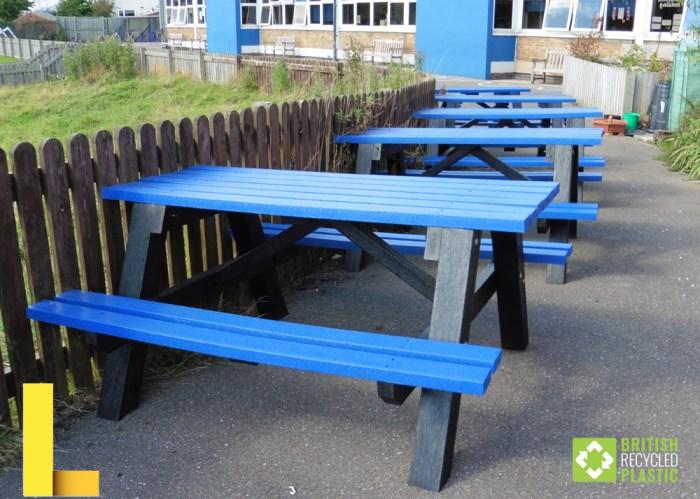
Beyond their fundamental utility, recycled plastic picnic tables stand out for their remarkable design versatility and their integral role in fostering a sustainable, circular economy. These tables transcend mere functionality, offering a broad spectrum of aesthetic choices and customization options that cater to diverse environments and user needs, all while promising an exceptionally long service life that culminates in further resource recovery.The inherent properties of recycled plastic lumber allow for an extensive range of design possibilities, making these tables suitable for various settings, from bustling urban parks and schoolyards to serene corporate campuses and private backyards.
This adaptability ensures that sustainability does not come at the expense of style or practical application.
Aesthetic Flexibility and Customization
Recycled plastic picnic tables are available in an impressive array of designs, shapes, and color options, providing unparalleled flexibility to match specific aesthetic preferences and functional requirements. Designers can choose from classic rectangular and square tables to more communal round or octagonal configurations, each offering distinct advantages for social interaction and space utilization. The material can be molded or extruded into various profiles, mimicking traditional wood aesthetics or embracing modern, sleek lines.
Furthermore, the color palette is extensive, ranging from natural earth tones like forest green, sand, and brown, which blend seamlessly into natural landscapes, to vibrant primary and secondary colors that can enliven playgrounds, schoolyards, or themed recreational areas. This broad selection allows for harmonious integration into any design scheme or brand identity.Moreover, these tables offer significant potential for customization, enhancing their utility and user experience.
- Integrated Umbrella Holes: Many designs incorporate pre-drilled holes to accommodate standard market umbrellas, providing essential shade and comfort during sunny weather, a crucial feature for outdoor dining and recreation.
- Accessibility Modifications: To ensure inclusivity, tables can be designed with accessibility in mind, such as extended tabletops or cut-out sections to facilitate wheelchair access, adhering to ADA (Americans with Disabilities Act) compliance standards and similar accessibility guidelines.
- Embedded Branding Opportunities: For corporate sponsors, municipalities, or educational institutions, the tables can be customized with embedded logos, plaques, or color-matched inserts. This feature offers a durable and visible branding opportunity, allowing organizations to proudly display their identity or acknowledge contributions while ensuring the message withstands the elements.
Maintaining Appearance and Longevity
One of the significant advantages of recycled plastic picnic tables is their remarkably low maintenance requirement, which contributes to their long-term value and sustainability. Simple and effective care procedures are all that is needed to maintain their appearance and integrity over many years, ensuring they remain an attractive and functional asset without significant upkeep costs.Maintaining the pristine condition of recycled plastic picnic tables is straightforward, requiring minimal effort due to the material’s inherent resistance to rot, rust, and insect infestation.
Embracing recycled plastic picnic tables offers a sustainable solution for any outdoor gathering. For your upcoming corporate function, consider pairing these eco-friendly options with memorable company picnic gift ideas that truly resonate with your team. Such durable and weather-resistant recycled plastic tables significantly enhance any communal outdoor environment for years.
- Regularly wipe down surfaces with a damp cloth to remove dust, pollen, and light debris.
- For more stubborn grime or spills, use a solution of mild soap and warm water, applying it with a soft brush or sponge.
- Rinse the tables thoroughly with clean water after cleaning to remove any soap residue.
- Avoid using abrasive cleaners, harsh chemicals, or scouring pads, as these can potentially scratch the surface or dull the finish.
- For large installations or particularly soiled tables, occasional pressure washing on a low setting can be an effective and efficient cleaning method.
Circular Economy Contribution and End-of-Life Solutions
The exceptionally long service life of recycled plastic picnic tables is a cornerstone of their sustainability, but their contribution to a circular economy extends even further. At the end of their decades-long utility, these tables retain significant value as a resource, offering clear pathways for further recycling or repurposing, thereby minimizing waste and maximizing material utility. This closed-loop approach underscores their environmental benefit from creation to eventual re-creation.Unlike traditional materials that often degrade or become unrecyclable, the plastic lumber components of these tables are designed for perpetual utility.
When a recycled plastic picnic table finally reaches the end of its exceptionally long service life—which can span 50 years or more due to its resistance to weathering, pests, and decay—it does not simply become waste. Instead, the material can be systematically collected, processed, and reintroduced into the manufacturing stream. For instance, a table that has served generations in a public park can be broken down, its plastic lumber components shredded, re-granulated, and then re-extruded into new plastic lumber products.
Recycled plastic picnic tables are incredibly practical, offering superior resilience for any outdoor occasion. Should you be envisioning a wonderful picnic on the beach miami , their resistance to salt and sand makes them an excellent choice. These durable, low-maintenance tables truly provide a smart, sustainable solution for public and private spaces alike.
This could mean the creation of new park benches, decking, fencing, or even entirely new picnic tables, demonstrating a true cradle-to-cradle lifecycle. This process significantly reduces the demand for virgin plastic materials and prevents valuable resources from ending up in landfills, embodying the core principles of a circular economy where materials are kept in use for as long as possible.
“The journey of recycled plastic from waste stream to durable outdoor furniture, and then back into new products, exemplifies the powerful impact of a truly circular economy model.”
This continuous cycle of use and reuse ensures that the environmental benefits of these tables are compounded over time, offering a tangible solution to plastic waste and resource depletion.
Ultimate Conclusion
Ultimately, recycled plastic picnic tables stand as a testament to ingenuity and environmental responsibility, seamlessly blending practical utility with profound ecological benefits. Their robust construction, minimal upkeep, and extensive design options make them an astute investment for any outdoor space. By embracing these sustainable furnishings, we not only enhance our public and private environments but also actively contribute to a healthier planet, underscoring a commitment to a truly circular and responsible future.
Common Queries
Are recycled plastic picnic tables safe for children and food contact?
Yes, they are generally non-toxic and splinter-free, making them safe for all users and suitable for food-related activities without posing health risks.
How do these tables perform in extreme weather conditions, such as intense heat or freezing temperatures?
Engineered for resilience, they are designed to withstand a broad range of temperatures without cracking, warping, or becoming brittle, maintaining their structural integrity year-round.
Do recycled plastic picnic tables retain their color over time when exposed to sunlight?
High-quality recycled plastic tables incorporate UV stabilizers during manufacturing to significantly resist fading, ensuring their vibrant appearance lasts for many years even with continuous sun exposure.
Are recycled plastic picnic tables significantly heavier or lighter than traditional wood or metal alternatives?
They typically offer a stable, substantial weight comparable to wood, providing excellent stability without being excessively heavy, often making them easier to relocate than some bulky metal designs.

